The Astrology Center of America, 207 Victory Lane, Bel Air, MD 21014
Tel: 410-638-7761; Toll-free (orders only): 800-475-2272
Home Author Index Title Index Subject Index Vedic Books Tarot E-Mail: Dave


Medieval Astrology

including Medieval Medical Astrology


Projects Hindsight/ARHAT weren't the first to go back to the past for inspiration. There is a steady, albeit small, trickle of classic books available, as well as some excellent modern books.

Medieval medical astrology books (the ones by Saunders & Culpeper, shown below), differ not only from modern medical astrology books, but also from modern medical texts as well. In a single volume, a guide to diagnose disease astrologically, a guide to the various types of humans (choleric, phlegmatic, melancholic), typical symptoms of many diseases - and how to spot them, astrological guidelines for when & how to administer treatment (using planetary hours), as well as suggested herbal-based remedies. No modern medical book of any kind can claim that degree of comprehensiveness.

William Lilly has his own page, as does Morin.

For earlier books, see Ancient Astrology & ARHAT.
For late 19th/early 20th century, see: Sepharial

Indicates a book on our Top Ten list. If you would like to find more books like it, click on the star.
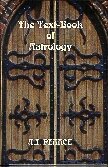
THE TEXT-BOOK OF ASTROLOGY - A.J. Pearce, $44.95
Contents: Preface to the second edition; Preface to the 2006 reprint, by James Herschel Holden

Book 1. Genethliacal Astrology:
1. Introduction; 2. Introduction, continued; 3. Genethliacal astrology; 4. The alphabet; 5. On the right ascension, declination, etc., of the heavenly bodies; 6. On dividing the heavens; 7. On casting a figure of the heavens; 8. Calculation of nativities; 9. The signs & constellations of the zodiac; 10. The Sun;

11. The Moon; 12. The planet Mercury; 13. The planet Venus; 14. The planet Mars; 15. The planet Jupiter; 16. The planet Saturn; 17. The planet Uranus; 18. The planet Neptune; 19. The fixed stars; 20. The import of the nativity;

21. Physical constitution & temperament; 22. The mind & disposition; 23. The fortune of wealth & rank; 24. On the vocation; 25. Marriage; 26. Children; 27. Friends & enemies; 28. Travelling; 29. The kind of death; 30. On primary directions;

31. Examples of rules for working mundane directions; 32. Zodiacal directions; 33. Examples of rules for computing zodiacal directions; 34. On equating arcs of direction; 35. On rectifying a nativity; 36. On solar revolutions; 37. On secondary directions; 38. On lunations, eclipses & progresses; 39. On transits; 40. On the effects of primary directions; 41. On the practical uses of astrology.

Appendix to book 1: To reduce mean to sidereal time; On the use of logarithms in astronomical calculations (with 12 formulas); To find the latitude & longitude of a star by the celestial globe; To find the arc of duration of a primary direction of the sun or moon.

Book 2. Mundane Astrology:
1. Introduction; 2. On the equinoxes & solstices; 3. On the new moon of the year; 4. Necessary considerations before judgement; 5. On the presignification of the planet Saturn when lord of the year; 6. On the presignification of Jupiter; 7. On the presignification of Mars; 8. On the presignification of the Sun; 9. On the presignification of Venus; 10. On the presignification of Mercury; 11. On the presignification of the Moon; 12. On the presignification of planets when in mutual configuration, one being elevated above the other, at a solar ingress or an eclipse; 13. On eclipses of the sun & moon; 14. On the presignification of the planets, according to their positions at eclipses of the sun & moon; 15. Examples of predictions made from recent eclipses of the sun & moon, solar ingresses & transits of the planets; 16. Mutual conjunctions of the major planets; 17. Comets.

Book 3. Astro-Meteorology:
1. Introduction; 2. The Sun; 3. The Moon; 4. The planet Jupiter; 5. The planet Saturn; 6. The planet Mars; 7. The planet Venus; 8. The planet Mercury; 9. The planet Uranus; 10. The planet Neptune; 11. The mutual conjunctions & oppositions of the planets; 12. Earthquakes & volcanic eruptions.

Book 4. Medical Astrology:
1. Epidemics & planetary influence; 2. Crisis in disease; 3. Diagnosis & prognosis of disease; 4. Therapeutics & astrology; 5. Medicines & planetary influence; 6. On the preservation of health.

Book 5. Elections:
1. Introduction; 2. Elections for affairs pertaining to the first six houses; 3. Elections relating to the last six houses; 4. The planetary dignities.

Appendix 2: Tables of houses for London & Northampton; Table of right ascension; Table of declination (north & south); Ascensional difference for the latitude of London; Ascensional difference for the latitude of Washington, D.C.

Comment: London-born Alfred John Pearce lived from 1840 to 1923. The first part of his Text-Book, on genethliacal astrology, was published in 1879. The remaining four books, as Part 2, were published ten years later, in 1889. They were revised & combined in a single volume in 1911, which the AFA reprinted in facsimile in 1970. It has long been a classic. I am pleased the AFA has reset and reprinted it, in a sturdy hardcover.

The tenor of the book: As a cookbook, it's a bit weak. Pearce delineates planets in signs, that's about it. The heart of the book, what makes it so wonderful (I was going to reprint this if the AFA had not) are the wealth of aphorisms & examples drawn from the author's own observations, coupled with his wide reading of astrological classics. Among them, Ptolemy, Manilius, the 17th century English classics (Partridge, Gadbury & Ramesey among them). The first book, on natal astrology, is excellent, as is the second, on mundane astrology. Books 3 & 4 (on astro-meteorology & astrology & medicine) are shorter and not as comprehensive, although much relating to medicine is given in the first book, and much relating to the weather is given in the second. The final book, on elections, is a condensed version of Ramesey's elections in Astrologie Restored, which someone must reprint eventually.

Regrettably, the book lacks both table of contents & index. Enterprising readers can fashion a table of contents from my list (above) merely by adding page numbers. An index would be priceless.

AFA, 504 pages, hardcover.


FIVE MEDIEVAL ASTROLOGERS - translated by James Herschel Holden, $21.95

Contents:

Translator's preface

Albumasar (c.787 - 886): The Book of Flowers

Pseudo-Ptolemy (author unknown, date prior to 800 AD): The Centiloquy

Hermes Trismegistus (author unknown, date prior to 1262): The Centiloquy

Bethen (probably written by Ibn Ezra, 1148): The Centiloquy

Almansor (12th century, Toledo, Spain?) The Propositions

Bibliography

Comment: These are five sets of aphorisms, of Greek or Arabic origins, that were translated from (largely lost) originals by the celebrated Twelfth Century Translators, of Spain & Italy. Increasing trade between Christian Europe & the Islamic world, in particular, Spain, had given Christians a taste for the many splendors in Arabic libraries. The twelfth century produced many hundreds of translations to satisfy this need. The Wiki page notably omits Every.Single.Astrological.Work translated by these men. When in fact many, if not a majority of the books translated were astrological in nature. We are, today, many years from exhausting those treasures. It was these translations that set the stage for the Italian Renaissance some three centuries later.

Medieval scholars gave far greater importance to the nature of numbers than we do today. Hence there are many sets of 100 aphorisms, from whence the title, "Centiloquy". One of the earliest surviving, and one of the best, is the one attributed to Ptolemy, though he did not write it. The next most famous is the set by "Hermes", though, again, actual authorship is unknown. All three sets given here, along with Almansor's 150 Propositions, mix some natal astrology with a lot of horary & electional. Albumasar's Book of Flowers is, uniquely, a book of mundane aphorisms. I have long awaited such a book.

These translations were made from critical editions of source material. In particular, the translation of the "Ptolemy" Centiloquy is from the recent Greek text of Emilie Boer.

AFA, 153 pages.


THE INTRODUCTION TO THE SCIENCE OF THE JUDGEMENTS OF THE STARS - Sahl Ibn Bishr, translated by James Herschel Holden, $24.95

Contents:

Translator's preface

Book 1: Introduction:
The essential signification of the circle; The accidental signification of the circle; The ascending house & whatever is in it is about questions, and the rest of the twelve signs; Angles, succedents & cadents; Difference in strength of the houses; Aspects; The 16 modes that signify perfection and destruction; The knowledge of the light or the orb of the seven planets; Separation; The conjunction of light; Prohibition; Reception; Minor reception; A planet not received; Void of course; Return; Giving virtue; Giving disposition and nature; The strength of the planets; The debility of the planets; The defects of the Moon; Explanation of besieging; Hays; Testimony; The joys of the planets

Book 2: The Fifty Precepts

Book 3: Questions or The Book of Judgements of the Arabs:
General rules; A chapter on the conjunction of the ASC

The second house on matters of substance

The third house on the matters of brothers

The fourth house on matters of heredity

The fifth house on matters relating to children and first about one child; Whether a child will be born to him or not; Whether a woman is pregnant or not, and whether she will bear a child or not; Whether a pregnancy is true or false; Whether or not a pregnant woman will bear twins; Whether she will bear a male or a female

The sixth house on the matter of infirmity; Something on the matter of slaves & freedmen; Buying a slave-girl; The relicts of a dead slave; Poseesion of the same

The seventh house on matters of marriage; Whether a woman who has fled from her husband will return; Whether a woman is a virgin or not; Whether or not a woman will bear a child; Whether a woman is pregnant from fornication; Whether a woman has a man she loves, or one who loves her; Which of the two will win a competition; What will be the action in buying & selling; Whether a fugitive or property or something else that is lost will be found or not; The place of the fugitive or the robber; Whether it is better to flee or to return; Whether or not the querent will get back what was stolen; A question about something lost - will it be found or not; A question about the robber - is he a foreigner?; The place of the stolen items; Whether the number of stolen items is one or more; The suspicion of the robber; On the same subject; What sort of thing was stolen; The thing stolen or pilfered, what it is and the type of thing; A question about the robber, whether it is a male or a female or an imbrio; A question about association & its outcome; A question about a general going to war; The cause of wars; The quality of the army

The eighth house in connection with the absent person

The ninth house on the matter of travel; The entrance of a traveler into a city; The journeys of princes & kings; What land would be better for the querent; Whether it would be good for the querent to set out on a journey; Release from captivity; The return of someone absent

The tenth house, about a kingdom; Question about anything, whether he will getit or not; Royal expenditures; A question about someone's condition put by a representative; Where is the ruler of the kingdom; A question about his taking his seat; The current condition of a kingdom; A person or king absent from a kingdom; Will he remain in his kingdom or not

The eleventh house, about hopes; The relationship between two persons; The realization of something hoped for

The twelfth house, on the matter of animals; The condition of the animal; A question about the age of the animal; Enemies

Letters; Another chapter on letters; Whether the letter is good or evil; What will be the response to the letter; Whether the letter is delivered or not; Whether the letter is signed or not; The man who is sending the letter; Whether a letter has reached the king or not; Rumors; A question about something that is feared; If a slain person will be avenged or not; Whether anything is true or false; Many things; More things; Hunting on the land; The quantity of hunting; A banquet to which you have been invited; The cause of the banquet; The signification of the planetary hours in questions

Book 4: Elections;
The ascendant and what is in it of elections in the knowledge of the natures of the signs, the first of which are the mobile signs; The fixed signs; The common signs; An election for the beginning of any work, and the ten impediments of the Moon

The second sign or the second house with its elections, and first about receiving & allocating money; An election for sharing money or some kind of work with someone; An election for investing money in order to profit from it; An election for buying or selling; An election for alchemical operations

The fourth sign or the fourth house and whatever kind of elections are in it, and first for building a house; An election for tearing down a house; An election for buying land or for leasing it, so that you may receive a return from it; An election for diverting a river or for digging a well; An election for planting trees; An election for sowing seed

The fifth sign or the fifth house with its elections, and first about begetting a male or female child; An election for removing a dead fetus from the womb; An election if you want to enroll a son in a course of instruction or send him to a place in which he may be taught some trade

The sixth sign or the sixth house with its elections, and first about expelling devils and ghosts from any place; An election for taking medicine or applying a plaster or any other kind of medication to any part of the body; When remedies for the belly should be administered; The head; The body; Cures for diseases; The eyes; An election for shaving the head with medicine; An election for buying slaves; An election for giving freedom

The seventh sign or the seventh house with its elections and first for marriage; An election for going to war; An election for buying or mutually accepting or returning instruments of war, or for destroying any place or instrument

The eighth sign or the eighth house with its elections

The ninth sign or the ninth house with its elections, and first for travels; An election for the entrance of a traveler into a region or city

The tenth sign or the tenth house with its elections, and first about going with the king to a region that he rules; An election for elevation to a kingdom; An election for putting the king on the seat of empire; An election for putting someone in charge of a restoration; An election for strengthing a rulership; An election for being inimical to a king; An election for mollifing a king who is angry with you

The eleventh sign or the eleventh house, and first for making friendship; An election for seeking something from someone

The twelfth sign or the twelfth house with its elections, and first for buying animals; An election for going out to hunt; An election for taking flight, or for whatever you wish to do secretly; An election for finding a fugitive; An election for writing a letter

Book 5: The Book of Times:
The principal knowledge of the times; Finding the significator of the time; The life of a man in the ascendant; The house of substance; The times of the third & fourth houses; The house of children; The house of illness; The seventh sign for the times or hours of war from the sayings of Theophilus; Remarks on the eighth house; The ninth sign on travels from the sayings of the ancients; The return of a traveler; A letter and rumors; The tenth sign in connection with a king from the sayings of Masha'allah

Appendix: A 9th house question: A question about a vision or dream

Index of persons
Bibliography

Comment: Like many acient books, the Table of Contents is a de facto index, listing the contents of the book, virtually page by page.

James Holden's Introduction says that Sahl Ibn Bishr, known in the west as Zahel or Zael, was a learned Jew who lived in the first half of the 9th century. He was at one time court astrologer to the Vizer of Baghdad. He is credited with writing 18 books in Arabic, five of which were later translated by a group known simply as the 12th century translators. The books were: Introduction to Astrology, The 50 Precepts, Judgments of Questions, Elections, and, The Book of Times. These are the five books which Mr. Holden has translated for us. For a source, Holden has conflated the first complete printed edition (Venice, 1493, I am unable to find it in Gardner), with a privately made microfilm copy of a 13th century Latin text from the Bibliotheque Nationale in Paris.

Based on the Latin text, Holden declares Sahl to have been a master of horary & electional astrology. His work was copied, without attribution, by Bonatti and Ibn Ezra, and later turns up in William Lilly's Christian Astrology, as well as Anima Astrologaie. So now we have the original source, or, at the very least, a much earlier one. Here is one of Sahl's entries:

A question about the robber, whether it is a male or a female or an imbrio [youth?]

And if you were asked about the robber, whether he is a male or a female or an imbrio, then consider which ascends of the forms of men in the face of the ASC in which the question is made, and declare according to the substance of those forms. And you may know that in the first face of Aries, there ascends the form of a black man dressed in a white tunic; and there ascends in the second face, the form of a woman over whom there are red strips of cloth; and in the third form is that of a man of a pale color with red hair.

And there ascends in the first face of Taurus, a man looking around and a naked man; and there ascends in the second face, a naked man in whose hand is a key; and in the third face, a man in whose hand is a snake and an arrow. (pgs. 87-88)

This is a use of faces that I had not read before, and potentially a very useful one. To be strict, Holden is unsure if this section is actually by Sahl or was added by later hands.

In his Introduction, under the heading, Special Features of Sahl's Techniques, Holden discusses the sign-house method of chart construction, where the first house is the entire rising sign, the second house is the entire second sign, the tenth house is the entire tenth sign (ie, the MC degree is ignored). He attributes this to the Alexandrians in the second century BC, he says it was imported to India (in theory, India learned astrology from the Greeks), where it is still used today. Holden does not mention the Greek book which allegedly taught India astrology. It was the Yavana Jataka (or Yavanajataka, "Greek Astrology"), which was translated by the late David Pingree. If I can get permission, I want to reprint this book & in my introductory notes, give a proper analysis of the role & function of early books, with an emphasis on the sign/house problem.

But two quick notes: The sign/house conflation is native to equatorial climes & presumably originated there. At 31 degrees north - the latitude of Alexandria - sign/house conflation only works somewhat. Further north in Europe, it collapses altogether. Which is why Europeans have spent a thousand years grappling with house division. It is bizarre to see this crude system promoted anew by the likes of Arhat & Hindsight. (Holden seems to be holding his nose.) Why was this issue not tackled by the Greeks? Because they lacked numerical representation that would enable them to perform the necessary calculations. If all they had were "Roman numerals", consider the problem of dividing MCCCXLVIII by XXIII (848 / 23 = 36.87) using such a crude symbol set. It is for this reason that Western mathematics was stunted until the introduction of Indian numerals, by way of the Arabs. What we know as "Arabic numerals" were first introduced to Europe by Fibonacci in 1202, but did not become commonplace until the invention of the printing press in the 15th century, some one thousand years after they were first developed in India. See Wiki's discussion.

As for the Yavana Jataka being the "seed book" for Indian astrology, this rests on a dual misunderstanding. First, of the role of early books in societies where knowledge was largely imparted from teacher to student by oral, not written, means. Second, India was not then, and is not now, the sort of society where ideas are easily propagated from one locale to another, which makes foreign seeding a very foreign idea. Ideas spread quickly & widely in Europe for a very different reason. But these remarks are better saved for later, when they can be presented in proper garb.

But aside from that. Another huge piece of the puzzle has just been given to us. All thanks to Mr. Holden, and the American Federation of Astrologers.

AFA, 213 pages.


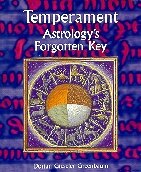
TEMPERAMENT: ASTROLOGY'S FORGOTTEN KEY - Dorian Gieseler Greenbaum, $35.00
Contents: Acknowledgements; Permissions; Preface; Introduction; 1. Theory & history of temperament; 2. Temperament theory applied: the Waldorf study; 3. Using temperament in modern astrological practice. Appendices; Glossary; Bibliography; Index.

Appendices: A. Determining temperament through the ages; B. Robert Burton & The Anatomy of Melancholy; C. Ramon Lull's descriptions of temperament; D. Nicholas Culpeper's descriptions of temperament; E. Poems on temperament; F. Culpeper's compound temperaments; G. Roy Wilkinson's temperament charts; H. Birthcharts of children used in the Waldorf study; I. Names, temperaments & temperament factors.

Figures: 1. Seasons correlated with qualities & elements; 2. Schoener's qualities, elements, seasons, planets, humors; 3. One example of how Aristotle's theory of the elements work; 4. Ramon Lull's system of elements & qualities; 5. Jungian functions; 6. Functions correlated with qualities; 7. Steiner's circle of temperaments; 8. Child's temperament diagram; 9. Anschutz's Greek humors diagram; 10. Qualities of the planets (a possible scheme); 11. Ptolemy's moon phases; 12. Lilly's moon phases; 13. Lilly's worked temperament example.

Tables: 1. Ptolemy's assignment of qualities (Tetrabiblos, book 1); 2. The nature of the signs according to Abu Mashar; 3. The nature of the planets according to Abu Mashar; 4. The Qualities of the signs according to Al Biruni; 5. The nature of the planets according to Al Biruni; 6. Qualities of the planets, by phase (Garcaeus); 7. Qualities of the moon, by phase (Garcaeus); 8. Qualities of the sun, by phase (Garcaeus); 9. Marc Edmund Jones's temperament system; 10. Steiner's correlation of body & temperament; 11. Child's mottoes, theme tunes & temperaments; 12. Temperament matches by individual factors (counting compound temperaments equally); 13. Temperament matches by ASC sign, moon sign, ASC ruler, ASC almuten, moon ruler, season; 14. Temperament matches by ASC sign, moon sign & season; 15. Qualities of the sun by season & sign; 16. Analysis of temperament in the natal chart.

How to recognize the temperaments (appendix G); Reactions of children to various situations according to temperament (appendix G); The golden rule for treating children according to temperament (appendix G).

Comment: Knowledge of the four temperament types, Choleric (hot & dry), Sanguine (hot & wet), Melancholic (cold & dry) and, Phlegmatic (cold & wet), and their combinations, are essential to the study of traditional astrology. The basic concepts date back to the Greeks, more than two thousand years ago. Over the centuries, many different formulas were devised for determining temperament from a birth chart, right down to the current era. Greenbaum takes the best of these and tests them against common-sense observations of children, arriving at a synthesis of techniques, with universal application. What's your temperament type? You might be surprised. According to the book, George Bush is choleric, Tony Blair is sanguine, Paul Simon is melancholy, George Harrison is phlegmatic. Temperament is also critical for astrology & medicine. This book fills a huge gap & will repay study many times over.

Wessex Astrologer, 217 pages.


ASTROLOGICAL JUDGEMENT & PRACTICE OF PHYSICK, Deducted from the position of the heavens at the decumbiture of the sick person - Richard Saunders, $29.95

Comment: Richard Saunders (1613 - 1692) was an astrologer/physician in 17th century England. This book, first published in 1677, was the result of thirty years practice. It is also one of the earliest astro-medical treatises in the English language. Using the terminology of his day, Saunders speaks of humors and winds, of conditions hot, cold or dry, of the cholerick and melancholy, etc. This is a comprehensive and demanding text on medical astrology. Included are rules for decumbiture charts, illnesses produced by the traditional planets in the various signs of the zodiac, when to administer medicines based on planetary hours, and much more.

Click for a PDF excerpt.

Coment continued, table of contents.

Astrology Classics, 397 pages.


ASTROLOGICAL JUDGEMENT OF DISEASES FROM THE DECUMBITURE OF THE SICK - Nicholas Culpeper, $17.95
Contents:

Liber 1: Judgment of diseases much enlarged, Abraham Avenezra of critical days;

Liber 2: Astrological judgment upon diseases, or a methodical way to find out the cause, nature, symptoms & change of a disease, etc.

Chapter 1: Definition of the word crisis; Chapter 2: Way to find out critical days, also decumbiture by ancient & modern writers; Chapter 3: Sympathy & antipathy of signs & planets; Chapter 4: Critical & judicial days by a figure of 8 houses; Chapter 5: Former rules illustrated by an example; Chapter 6: How to set a figure of 16 houses & judgment on it, how to set a figure of 12 houses for the crisis; Chapter 8: To find the exact time of crisis by a table of logistical logarithms; Chapter 9: Certain precepts premised before the Prognosticks; Chapter 10: General Prognostications of the disease;

Chapter 11: The diseases the planets signify, diseases the signs of the zodiac signify, parts of the body the planets rule, parts of the body ruled by signs; Chapter 11 (sic): How to read a decumbiture chart; Chapter 12: How to know if the disease be in the mind or body; Chapter 13: How to know which part of the body may be afflicted; Chapter 14: How to know if the disease will be long or short, or whether it will end in life or death, signs of long or short sickness, signs of life at decumbiture, signs of death; Chapter 15: For the cure of any disease take these few rules; Hermes Trismegistus upon the first decumbiture; Results of Moon in each sign afflicted by Mars & Saturn; Chapter 16: Observations of Cardan, Augerius Pererius, Boderius, John Antonia Maginus, John Baptista Triandula.

There follows the Four Books of the Presages of Hippocrates, finally, Culpeper's own Urinalia, an extensive study of problems in the urine, bladder & kidneys.

Comment: Another excellent medieval astrological medical text. Nicholas Culpeper (1616-1654) is best-known today for his English Physician, a comprehensive guide to the medicinal uses of native plants & herbs, the first such book published in English. Culpeper, a Puritan, was the son of a clergyman. In 1634 he spent a year at Cambridge, where he learned Greek & Latin, which enabled him to study old medical texts. He was apprenticed to an apothecary & started his formal practice in Spitalfields, London, around 1640. Culpeper supported the Parliamentary side in the English Civil War, suffering a severe chest wound in 1643. After recovering he returned to his medical practice in London, where he established a reputation as an outstanding healer. War wounds combined with overwork led to his death from exhaustion in 1654, aged 37. According to his widow, he left behind some 70 unfinished manuscripts.

In his short life, Culpeper was a very busy, very successful astrologer/doctor. This book is his own opinionated guide to astrological medical diagnosis: What astrological factors to look for, what they mean, from someone who KNEW. Appendix: His Urinalia, a short but complete guide to the urine. The text, while newly reset, retains the spelling & punctuation of the original. Two of the great classics. Click here for a PDF extract.

Astrology Classics, 182 pages.


ARABIAN PARTS DECODED - Lind Weber, $21.95
Contents:
Preface; Creation of a mystery; Doldrums & discovery; Fortunes & Lots, parts & points; The Arabian midpoints; Uranian conversion; Why the ascendant is the key to the system; The predictive system; The framework: the predictive system of the parts; Of astrology & spirituality;

Fortuna & spirit; Cutting to the chase; On midpoints; The proliferations; Do we change at night?; The trines of Jupiter & the squares of Saturn; Arabian Parts: The part of Death; The parts of Jupiter; What does a part mean?; Examples we're all asking about;

Arabian parts & midpoints; Of Apheta & Anareta; Orbs & the Arabian parts; Progressing & enhancing the parts; Do the parts always work?; The misfortunes of Fortuna; Introduction to practical forecasting; A historical sketch that makes sense; The mystery was natural understanding; Lecturing at AFA 1996;

A visit with Manilius; At the balance chart bazaar; Fortuna in the natal chart; Examples: Natal conjunctions of Fortuna & Spirit; Fortuna in the event chart; Closing comments; The astrology of missing persons; Fortuna & the Scorpio Independence chart; Bagdad the survivor; Glossary; Chart sources; Bibliography.

Comment: I've been asked for years for a good book on the Arabic Parts & this is it. Not so much "decoded" as DECIPHERED. Lind compares parts to midpoints, which in fact they are. Arabic Parts are midpoints that incorporate house cusps. More surprisingly, the Parts relate to transit timing: Transits activate a part, based on the house, sign & rulership in question (pg. 43). Lind also reveals how this nifty system was deliberately distorted in the middle ages to keep it secret. Includes Reciprocals, Proliferation, day/night charts, lots more.

AFA, 212 pages, paper.


THE NATIVITY OF KING CHARLS - John Gadbury, $5.50
From 'The Epiftle Dedicatory':"The Subject of this little Book may feem ftrange to fuch Perfons, that know nothing above the earth they tread on. Yet to you (worthy Sir!) being acquainted with the Radix thereof, it cannot but appear otherwife." 128 pages. Clara M. Darr, publisher, small paper.


ARABIC PARTS IN ASTROLOGY, A Lost Key to Prediction - Robert Zoller, $16.95
Contents: How the Parts were lost; The metaphysical basis of the Parts; How to use the Parts; Bonatti's treatise on the Parts (Zoller's translation); The extraction of the Parts for purposes not listed; Natal figures; Comparing natal figures; Commodities variations; Spiritual counseling. Appendices: On the lots of Manilius; On Firmicus' Duodecatemoria; On profection; On Bonatti's use of the Parts of the father; Parts used by al-Biruni in horary questions. 245 pages including metaphysical bibliography, index of parts, general index. Inner Traditions, 245 pages.


The Astrology Center of America

207 Victory Lane, Bel Air, MD 21014
Tel: 410-638-7761; Toll-free (orders only): 800-475-2272

Home Author Index Title Index Subject Index Vedic Books Tarot E-Mail: Dave


Established 1993, The Astrology Center of America is owned & operated by David Roell.
This entire site (AstroAmerica.com) is copyright 1996, 1997, 1998, 1999, 2000 by William R. Roell.
All rights reserved.