The Astrology Center of America, 207 Victory Lane, Bel Air, MD 21014
Tel: 410-638-7761; Fax:410-638-5154; Toll-free (orders only): 800-475-2272
Vedic TITLE Index Vedic AUTHOR Index Vedic PAGES Index Vedic SEARCH Engine Astrology Home E-Mail: Dave


Vedic Astrology:

Authors names beginning with L, M, O


Authors included on this page: N.C. Lahiri, J.C. Luthera, Dinesh S. Mathur, Gopesh Kumar Ojha & Ashutosh Ojha.


- L -

CONDENSED EPHEMERIS, 1941-1951 - N.C. Lahiri, $8.00
Contents: Preface; Contents; Local mean time of sunrise & sunset (for 0 / 10, and 30 / 35 N); Changes in the timings in India; Condensed ephemeris, 1941-1951; Sidereal time table 1 for noon LMT for 82.5 E & 1900 AD; Sidereal time table 2: Correction for years 1941-1951; Sidereal time table 3: Correction for places (10 on the sub-continent, 3 others in Asia, & London & New York); Latitudes & declinations monthly, 1941-1951, for Saturn, Jupiter, Mars, Venus & Mercury (Uranus given annually); Sayana transit of Sun, 1941-1951; Entrance of planets into Nirayana signs, Mars, Jupiter, Saturn, Uranus & Rahu, 1941-1951; Lunar & Solar eclipses; Motion of planets; Motion of Moon; Motion of Rahu, Uranus, Neptune & Pluto; Astottari & Antar dasa; Balance of Vimshottari dasa by longitude of the Moon; Navamsa signs & their lords; Local Mean Times of sunrise & sunset for 7, 13, 19, 25.5 & 28.6 degrees north; Proportional logs; Instructions for erecting a birth-chart.

Comment: Cheaply printed, but a fine piece of work, often overlooked by Americans. These are often hard to get, but if there's interest, would be happy to try & get more.

For each of the eleven years in this ephemeris: The main ephemeris runs for three and a half pages. It is preceded by a page of Lunar positions (daily). It is followed by longitudes of Rahu, Uranus, Neptune & Pluto, given monthly. Following that, a table of Combustion, or Heliacal setting of planerts, a table of Retrogression of Planets, New & Full Moons, and Sun’s entrance into Nirayana signs. Click here for a sample page.

Astro-Research, 100 pages.


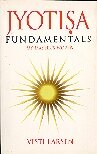
JYOTISA FUNDAMENTALS, My Master's Words - Visti Larsen, $40.00
Contents: Preface; Contents; List of charts; List of tables; List of figures

1. Pancanga: The five limbs
2. Grahas & rasis
3. Bhavas
4. Sambandha (relationships)
5. Tools
6. Arudha
7. Karakas: significators
8. The first, fifth & ninth houses
9. The second, sixth & tenth houses
10. The third, seventh & eleventh houses
11. The fourth, eighth & twelfth houses
12. Narayana dasa

Frequently asked questions; Bibliography

Comment: On the back cover, it says:

Visti Larsen's journey of the occult began with Western Astrology in 1998, and moved on to jyotisha or Vedic Astrology in the year 2000. He joined Sri Jagannath Centre in 2001 to learn astrology as taught in the lineage of Sri Achyuta Dasa of Puri, Orissa and at his guru's request became a jyotish guru and began teaching in 2002.

Since then, he has spent most of his time traveling with his guru, Sanjay Rath, to conferences in the USA, UK and India. He has been learning directly from his teacher during this time, which has become the seed for this publication.

The book starts with a testament: I, Visti Larsen, born to Kaj and Maymuna Larsen on November 21st 1981 at 6 am in Nairobi, Kenya. Grandson of Christian and Agathe Larsen as well as Ali and Fakir El-kindi... On pg. 324 he gives the time as 6:08 am.

It's a nice book, has a lot of details, though I suspect they may be a bit thin. This is the second new book from Sagittarius publishers. Unlike Sanjay Rath's Collected Papers, there really is no good reason for the price. A note to Sagittarius: All other factors aside, a book must have a proper price, not too expensive, not too cheap (as if that's possible!), in order to find the readers it, and its author, deserve.

Sagittarius Publications, 341 pages.


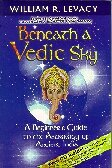
BENEATH A VEDIC SKY - William R. Levacy, $19.95

Contents:
Foreword by Gayatri Devi Vasudev; Preface; Acknowledgments; Introduction;

Skill 1: The basics of analysis: 1. Starting with chart formats; 2. Planets - Grahas; 3. Zodiac signs - Rasis; 4. Houses - Bhavas; 5. Planets in signs; 6. Planets in houses; 7. Planetary rulerships; 8. Yogas - planetary combinations; 9. Nakshatras - moon signs; 10. Navamsa & divisonal charts;

Skill 2: Synthesizing: putting the basics together: 11. Rectification of birth time; 12. Interpretation - how to analyze & synthesize a chart;

Skill 3: Forecasting or predicting events: 13. Predicting events; 14. Gochara - planetary transits; 15. Timing events with muhurtha;

Skill 4: Corrective actions: 16. Remedial measures;

Skill 5: Combining one chart with another: 17. Techniques to judge compatibility;

Skill 6: Judging the world's behavior & events: 18. Mundane or world astrology;

Skill 7: Astrology & other Vedic systems: 19. Ayurveda: the science of health; 20. Vastu: the science of space.

Appendices: Supplemental Vedic astrology material; Glossary; Bibliography; Resources; About the author. CD-Rom & instructions for use.

Comment: This is one of the best books to start a study of Vedic Astrology, but there’s more. Also included is a CD-Rom of Goravani Jyotish for PC & Mac. For a number of years, Goravani Jyotish has been one of the leading Vedic astrology programs. The CD-Rom version included with this program has limited functions (one chart at a time, no printing), but is otherwise easy, quick & accurate. Also on the CD: A guide to correct pronunciation of Sanskrit terms, another invaluable aid for the learner.

Hay House, 417 pages, plus CD-Rom.


BENEATH A VEDIC SUN: Discover your life purpose with Vedic astrology - William R. Levacy, $23.95
Contents: Preface: How to read this book; Introduction: The intentions of this book;

Part 1: Fundamentals of Vedic philosophy & life purpose
1. Vedic philosophy & life purpose
2. A list of Vedic principles
3. Vedic life-management tools

Part 2: Fundamentals of modern career principles & life purpose
4. Defining life purpose
5. Traditional western approaches to finding purpose

Part 3: Fundamentals of Vedic astrology & life purpose
6. Vedic astrology: career & behavior over time
7. Putting it all together - how to interpret a career chart
8. Understanding career through timing periods

Part 4: Vedic astrology & supplemental systems
9. Ayurveda for maximum health
10. Vastu & optimal space for career success

Appendix:
Sample analysis: Jane Fonda
Planetary values sheet
Career analysis worksheets
Bibliography
Running the enclosed free Vedic astrology CD

Vedic resources
Index
Acknowledgements
About the author

Comment: As big as all other Vedic books on careers & professions combined. So what can you find in nearly 400 pages?

The first 105 pages, the first two entire Parts, are a hash of Vedic philosophy (Part 1), and a rehash of basic job-hunting techniques. Richard Bolles set the standards here decades ago in What Color is Your Parachute, which is still in print. If you need a job, get it & read it.

The first part of Part 3 gives us the usual delineation of planets, and of planets in signs & houses (which he conflates). It continues with the various rising signs, and then, delineations of planets in the 10th, for those lucky enough to have planets in the 10th. This actually repeats his earlier delineations for the planets in the 10th & no reason is given why this house should be duplicated in this way. Levacy then gives rather weak delineations of the 10th house ruler domiciled in the various other houses.

This is followed by planetary pairs. Pairings are not by aspect, but by dispositors (including exaltations) and by dasa-bhuktis. If, at this moment, your mahadasa is Venus & the sub-dasa (bukti) is Jupiter, you have a temporary Venus-Jupiter pairing. Here again, the writing is weak. Here is the Sun / Moon:

Favorable Attitudes & Traits: High spiritual capacity, ability to forego the world for enlightenment; benefits from a conservative approach.

Unfavorable Attitudes & Traits - Strong (Excessive): Emotional turmoil; easily upset; ambitions are blocked; unexpected expenses; struggles to thrive; misunderstood & misunderstanding; self-centered; spends most time caring for themselves & in turn cares little for others or anyone else. (pg. 235)

According to Levacy, these are traits of those with Sun in Cancer (Moon rules); Moon in Leo (Sun rules); Moon in 5th house; Sun in 4th house (for the natural zodiac starting with Aries); Sun aspecting Moon or Moon aspecting Sun [these "aspects" are undefined & presumably not the western sort, as Vedic astrology has its own rules here]; Sun Dasa, Moon Bhukti; Moon Dasa, Sun Bhukti. (pgs. 234-235)

The writing gets better in chapter 7, which neatly sumarizes the basics of reading a Vedic chart, with an emphasis on career. Chapter 8 (three pages) sums up Vimshottari dasas, which is to say that if your 10th house ruler, or Sun, or Moon, or Lagna ruler is strong in your chart, then those dasa periods will be favorable. If not, well... By themselves, these are fine chapters. There are no chart examples in this book.

This book was intended for a mass market. If you are not already familiar with Vedic astrology, and if you want to work very hard, this book may be of help. On the other hand, if you're not familiar & you do work very hard, you may very well end up a Vedic astrologer. I did not review the CD-Rom of Parasara's Light. I presume it is similar to the one in his first book (above), to which Levacy continually refers.

Hay House, 395 pages. Includes CD-Rom (Windows only)


VEDIC ASTROLOGY SIMPLY PUT - William R. Levacy, $19.95
Contents:

Preface: The purpose of this book
Introduction: A comparison of Vedic & Western systems

1. Foundations of Vedic philosophy
2. Fundamentals of Vedic astrology
3. Grahas: The Vedic planets
4. Bha Chakra: The Vedic zodiac
5. Rasis: The Vedic signs of the zodiac
6. Vedic houses & planetary rulerships
7. The 27 Nakshatras or Moon signs
8. Introduction to a traditional Vedic chart calculation
9. Keys to Vedic chart forecasting
10. Remedial measures: Tuning & correcting the waves of life
11. Supplemental Vedic systems: Ayurveda & Vastu

Appendices:
Running the enclosed free Vedic astrology CD from GeoVision
Vedic resources
Bibliography

Acknowledgments
About the author

Comment: This is a coffee-table book in small size. Every page is coated stock with full four-color print. Levacy gives us the fundamentals, but for unknown reasons, his writing is clipped. An examaple from page 129, on the 8th house:

Basic nature: Unfavorable, perhaps the worst of the unfavorables; but still possibly okay
Still possibly okay??? Was this added by an editor? The summation for the 8th house, as given on page 41 of Beneath a Vedic Sky (above) says merely, Unfavorable, perhaps the worst.

I confess I had just started looking through the book when I chanced across the delineation for the 12th house. Pleasures of the bed got the very barest mention, and then only as "sexual pleasures", and to be safe, it was buried in the middle of a long catalogue of traits for that house. Just as "death, dying" was buried in a similar catalogue for the 8th. The 10th, the "House of Action", shows an illustration of a seated man with a "certificate of merit".

I was encouraged by the title to Chapter 8, Introduction to a traditional Vedic chart calculation, only to find it was about interpretation, not calculation. I dislike abuse of language, so at that point I closed the book. I did not want to look further. I presume the author lost control of his book at some point in the publishing process.

The best thing about this book may be the "starter's edition" [sic] of Parasara's Light in the back, but for the same $20, you can get the same starter software with Beneath A Vedic Sky, a much better book.

Hay House, 299 pages, hardcover with dustjacket.


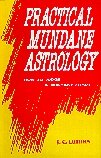
PRACTICAL MUNDANE ASTROLOGY: Basic Principles - J.C. Luthera, $10.00
Contents: Preface; Introduction; 1. Planets, signs & constellations; 2. Affinity between signs & constellations and different areas of earth; 3. Significations of planets in mundane astrology; 4. Significations of 12 houses in mundane astrology; 5. Significations of houses in an organization or company chart; 6. Significations of signs in mundane astrology; 7. Significations of constellations in mundane astrology; 8. Erection of mundane charts; 9. Aspects, both Hindu & western; 10. Basic principles of judgement.

Appendices: 1. Countries & cities by sign; 2. Constellations ruling various regions in India & a few adjoining countries; 3. Planets ruling various regions in India & a few adjoining countries; 4. Standard times of different countries & zones within a country; 5. Dates standard time was adopted by different countries; 6. Ayanamsa correction, 1901-2000.

Comment: Most of the basic stuff you would expect, some nifty details you might not. He includes full write-up on Uranus, Neptune & Pluto, which is rare in western mundane books & probably unique in Vedic. Luthera says Neptune rules socialism & vast utopian schemes, as well as exaggeration & inflation. He says Pluto is "group activity". When in good aspect, it's generally beneficial. When in bad aspect, dictators, mass destruction, massacres, etc. He quotes B.V. Raman on the importance of the new moon in Pisces chart as an indicator for the rest of the year (eg, 11 subsequent lunations). This, and the annual Aries ingress charts are, of course, set in the Lahiri ayanamsha, not the tropical zodiac. Rulerships for nakshatras (eg, constellations) are unique as far as I remember & of interest.

Sagar, 165 pages.


PRACTICAL MUNDANE ASTROLOGY: How to judge a mundane chart - J.C. Luthera, $20.00
Contents: Preface; 1. Principles of judgement; 2. General influence of planets in houses of mundane charts (includes lunations, Rahu & Ketu); 3. Major conjunction of planets (Jupiter/Saturn, Jupiter/Uranus, Jupiter/Neptune, Jupiter/Pluto, Saturn/Uranus, Saturn/Neptune, Saturn/Pluto, Uranus/Neptune, Neptune/Pluto, Pluto/Uranus, Mars/Saturn, Mars/Jupiter, Mars/Uranus, Mars/Neptune, Mars/Pluto); 4. Transit of planets in mundane astrology (Uranus, Neptune, Pluto, Saturn, Jupiter, Mars, Rahu & Ketu), transit effects of the lords of the 12 houses;

5. Eclipses: effects of solar eclipses by sign & decanate, eclipses as given in the Brihat Samhita, effects of planets on eclipses, effects of conjunctions on eclipsed luminaries, effects of eclipses in lunar months, results of the manner of ending of eclipses, events following the termination of eclipses, two eclipses in one month, results of an eclipse in the 10th house, example eclipse chart;

6. Comets; 7. Earthquakes; 8. Planetary cabinet; 9. Planets acting as lord of the year; 10. Effects of 60 lunar years; 11. Practical examples of interpretation of charts.

Appendix: Indira Gandhi's chart, Indian independence chart, Pakistan independence chart, Chart for Gen. Zia-Ul-Haque.

Comment: The section on planets in houses is the most extensive I've ever seen. The section on conjunctions will give mundane astrologers lots of useful ideas. In the chapter on transits, transits of Saturn include transiting Saturn through the nakshatras. The chapter on eclipses runs 23 pages. The effects of solar eclipses by decanate is largely identical to those given by Raphael, but here, are applied to the Sidereal zodiac, not the tropical. Events following the termination of eclipses are omen-based, such as, if a dust storm rises within 7 days of the ending of the eclipse, then the danger of famine is there. (pg. 269)

The chapter on comets includes notes by Varahirmira & a few of the comets he noted. The chapter on earthquakes includes various sets of rules from various sources, both western & Vedic (notably lacking: B.V. Raman). Planetary cabinet is an idea taken from the Kalaprakasika & includes King, Minister, lords of paddy crops, vegetation, minerals, clouds, grain & fluids, based on various ingress charts. Brief delineations are given for the planets for each of these positions. He describes a 60-year, lunar-based cycle, which would seem to relate to a similar 60-year Chinese cycle. As to where we are in the cycle at the moment, Luthra names Raktashi (#58) as the lunar year that began on 4 April 1984. That makes 2004 Tarana, a year of abundant rain & crops. 2005, Parthiva, would be a year of abundant crops & happy people. These are based on a year beginning with the new moon in Pisces, sidereal zodiac. Luthra delineates the 1984, 1987 & 1988 charts, for India.

Sagar, 366 pages.


- M -

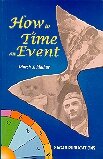
HOW TO TIME AN EVENT - Dinesh S. Mathur, $26.00

Contents:

Preface

1. Preliminaries:
Extent of houses; Signs inimical to planets; Sambahdhas; Nodes - Rahu & Ketu; Relationship between a planet & houses; Relationship between planets; Arudha & divisional charts; Determination of relatives; Karakas, essential planets, factors & karaka properties; Signs; Nature of planets & houses; Elements of planets; Aspects; Strength of planets; Strength of houses; Basic characterization of houses; Constellations; Planets in signs; Marakas; Basic characeristics of ascendants.

2. The Major Period:
Some independent methods of timing; Major period analysis; Results relating to general significations of planets; House dependent results of the period of a planet; Results of planetary periods based on linkages.

3. The Sub & Inter Periods:
Sub period analysis; Inter period analysis; Inferior period analysis; Concise general method for determination of period results; Results of sub period of the major period planet; Relocation, incarceration & direction of journey; Effect of distance between major & sub period planets; Effect of specific sub periods; Principles to fix timing; Time of operation of a planet in its period.

4. The Annual Chart.

5. Transits:
Traditional rules for transit analysis; Transit ruler of the band of years; Transit of the period planet; Transit of the karaka; Transit of the Sun; Transit of the Moon.

6. Applied Astrology.

Bibliography
Index.

Comment: On the back of the book, it says,

This is the first work in which an attempt has been made to scientifically put to practice concepts relating to progression only hinted at in Bhrigu Samhita of the hoary past. This is a unique attempt that has been successfully employed to time events correctly.

The question of timing of events has remained unanswered for long. It has been said that only with a well developed sense of intuition can an astrologer correctly predict the time of happening of an event. The author in this book has shown that with correct application of classical techniques it is possible to predict an event accurately. These techniques have been enunciated with clarity in this book and their use has been explained lucidly with charts drawn from real life.

For what the author means by "progression", see the notes on Vedic Progressions.

Sagar, 363 pages.


VEDIC PROGRESSION - Dinesh Mathur, $27.00

Contents:

Acknowledgment
Foreword

1. What is progression?
2. What are the important basic concepts?
3. How to calculate a progressed position?
4. How to interpret the progression of a Vimshottari major-period planet?
5. Vimshottari period & progression of major period planet
6. How to interpret the progression of a ruler of the band of years?
7. How to interpret the progression of the major period planet in an annual chart?
8. Progression of the Karakas

Index

Comment: From page 1:

When we talk of Vedic Progression it means advance or retreat of a planet at a fixed pace through the houses. The planet forms relationships with natal karakas (significators) and houses during such motion. Such developing relationships point to likely events in the future. In Vedic progression, planets move from house to house at a fixed pace and when they form relationships with karakas and houses they materialize events. These relationships are generally not based on aspects. They are formed by occupation of a house, constellation or navamsha. They are also formed by association or sambandha. The movement of a planet could be forward if it is in direct motion at the time of birth, or backwards, if it was retrograde at that time. The forward movement is called progression, the backward, retrogression.
In Chapter 3, we learn a progressed planet spends as many months in a sign as it spends in years in Vimshottari maha dasa, which the author suggests reducing to days for accuracy. This is a variation on the western minor progression, which is a month for a year swap. On page 70 is a handy table. From it, we learn that during its major cycle, progressed Venus spends 20 months, or 608.76 days in each sign, or 20.29 days per degree. The progressed Sun, during its mahadasha, spends 6 months, or 182.63 days in each sign, etc. When a progressed planet comes in contact with a natal karaka, it tends to give results according to the karkaka.

The author says his book seeks to combine the north Indian Bhrigu Samhita, with the south Indian Nadi Granthas.

Sagar, 293 pages.


PREDICTIVE ASTROLOGY, An Insight - Dinesh S. Mathur, $25.00
Contents: Preface; 1. Signs, including an extensive description of each of the 12 rising signs; 2. Planets: introductory notes, planets in signs & houses; 3. The lunar nodes, Rahu & Ketu, by sign & house; 4. Houses, 1 - 6, introductory notes, delineations for signs on the cusps as well as house position of their lords; 5. Houses, 7 - 12, introductory notes, delineations for signs on the cusps as well as house position of their lords; 6. A new look at the Vimshottari dasa system; Index.

Comment: A solid, analytical overview of the natal chart. The major part of the book, on houses, is particularly well done.

Motilal Banarsidass, 435 pages.


- O -

ASTROLOGY & YOU - Gopesh Kumar Ojha & Ashutosh Ojha, $15.00
Contents: Preface; 1. What is astrology; 2. The birth chart; 3. Signs; 4. Houses; 5. Planets; 6. Planets in signs; 7. Planets in houses; 8. Judging the chart; 9. Planetary periods; 10. Timing of events; 11. Transits. Appendices: 1. Table of the precession of the equinoxes & nutation; 2. Ayanamsa, 1976-2032; 3. Sanskrit terms; 4. Astrological terms.

Comment: A useful introduction to Vedic astrology.

Motilal Banarsidass, 163 pages.


ASPECTS IN VEDIC ASTROLOGY - Gopesh Kumar Ojha & Ashutosh Ojha, $15.00
Contents: Preface; Introduction; 1. Conjunctions of two planets; 2. Conjunctions of 3 planets; 3. Multiple conjunctions; 4. Aspects of Sun, Moon & Mars; 5. Aspects of Mercury & Jupiter; 6. Aspects of Venus & Saturn; 7. The ninth house (conjuctions of 2 & 3 planets in the 9th, Jupiter in the 9th); 8. The Moon sign (planets in the 10th house from the Moon); 9. Important combinations for health, longevity, heart, mind, relations, friends & enemies, marriage, wealth, luck, real estate, vehicles, status, position; 10. Judgment guidelines. Appendices: 1. Influence of planets; 2. Influence of Uranus; 3. Effects of Neptune.

Comment: This was earlier published in the US by Passage Press. It is now published in India.

Motilal Banarsidass, 183 pages.


THE SOLAR RETURN OR VARSHAPHAL, The Tajik System of the Year - Gopesh Kumar Ojha & Ashutosh Ojha, $25.00
Contents: List of tables & charts; Preface

Introduction: How do we proceed to calculate; What is a solar return; 1. Joys & sub-divisions; 2. First principles; 3. The Lord of the Year; 4. Muntha & sensitive points "SAHAM"; 5. The sixteen yogas; 6. Tripataki Chakra; 7. The timing of events; 8. Guidelines to interpretation; 9. Health & illness; 10. Wealth, love & family; 11. The worldly game; 12. Horary astrology.

Appendix: Calculations of house divisions; Tables of balance of vimshottari dasha & antardasha; Glossary; Index.

Comment: From the preface:

The present book is simple, easy to understand and does not rely on rigorous mathematical calculations. For easy references we have given various tables which will work like ready-reckoners. The different yogas have been well illustrated by example charts. The Tripati Chakra links the Nativity & the Solar Return chart. The results are accurate. The Varsh lagna viz., the Solar Return chart is in fact a magnified version of the events to take shape in the year. [emphasis in original] From this we can also cast:

(A) Monthly horoscopes, (B) Daily horoscopes, and (C) Lunar horoscopes....

What is indicated in the Solar Return charts will materialize only if it is also indicated in the Nativity & what is indicated in the charts for the months will take shape if it is indicated in the nativity as well as in the annual chart or monthly charts for after all these are only the magnified versions of the events indicated in the original Nativity. (pgs. xviii-xix)

Motilal Banarsidass, 292 pages.


The Astrology Center of America

207 Victory Lane, Bel Air, MD 21014
Tel: 410-638-7761; Fax:410-638-5154; Toll-free (orders only): 800-475-2272

Vedic TITLE Index Vedic AUTHOR Index Vedic PAGES Index Vedic SEARCH Engine Astrology Home E-Mail: Dave

Established 1993, The Astrology Center of America is owned & operated by David Roell. Except where noted, this entire site (AstroAmerica.com) & its contents are Copyright © 1996, 1997, 1998, 1999, 2000 by William R. Roell. All rights reserved.