The Astrology Center of America, 207 Victory Lane, Bel Air, MD 21014
Tel: 410-638-7761; Fax:410-638-5154; Toll-free (orders only): 800-475-2272
Home Author Index Title Index Subject Index Vedic Books Tarot E-Mail: Dave


Mercury, Venus, Mars, Jupiter & Saturn in Astrology

Books about planets are among the most common books in astrology. Here are books about Mercury, Venus, Mars, Jupiter & everyone's favorite, Saturn.


Planets: The Moon Mercury-Saturn Uranus-Pluto Leftovers!


Indicates a book on our Top Ten list. If you would like to find more books like it, click on the star.
MERCURY

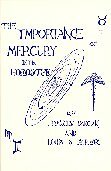
THE IMPORTANCE OF MERCURY IN THE HOROSCOPE - Frances Sakoian & Louis Acker, $7.00
Contents:

Acknowledgments

The importance of Mercury in the horoscope
Mercury in the element air
Mercury in the element fire
Mercury in the element earth
Mercury in the element water
Retrograde Mercury
Mercury in the houses

Comment:

"It is generally agreed that the fundamental characteristic that distinguishes man from all other species is his ability to think, to reason, to plan, and to use tools. All of these characteristics are under the rulership of the planet Mercury." (page 1)

A small book. Sakoian & Acker write well & express themselves clearly. Their books, even small ones like this, are always worthy of study.

CSA Printing & Bindery, 41 pages


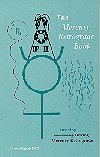
THE MERCURY RETROGRADE BOOK - Therese Francis, $12.95
Contents:

1. Do planets really move backwards? Direct. Stationing. Retrograde. Shadow.

2. Introducing Mercury. Heeerre's Mercury. What not to do.

3. Change your perceptions, change your world: Mercury perceived as enemy; Mercury perceived as teacher; Mercury perceived as friend.

4. To everything there is a season: Breathe deep: Mercury stations; Get ready: Mercury retrograde; Get set: Mercury's shadow; Go: Mercury direct.

5. What to do.

6. Survival tactics: Before Mercury goes retrograde; While Mercury is retrograde; While Mercury is in shadow.

7. Getting more specific: At home; In the news.

8. Transiting houses.

9. Transiting aspects.

10. Putting it all together.

12. Keys to thriving during Mercury retrograde: More stories. The five keys.

Appendices:
A. Mercury stations & positions, 2000-2014
B. Determining true local time
C. Are you the exception?
D. Using polar coordinates to determine aspects
E. Glyphs
F. Quick aspect table
G. 50 things to do during a Mercury retrograde

Epilogue

Comment:

Useful. Here's the book we all need but won't admit it. Get this book & during the next Mercury retrograde, don't just hide for 3 weeks, do the useful things suggested in this book: What to do before it retros, what to do while it's retro (by sign & by house), what to look out for afterwards, in the 2 week "shadow" (eg, the time it takes to catch up to where it was before it went retrograde). Intended for the novice, but packed with helpful hints. My favorite book on Mercury retrograde.

Crossquarter Breeze, 112 pages


MERCURY RETROGRADE: Your survival guide to astrology's most precarious time of the year - Chrissie Blaze, $19.95

Contents:

Acknowledgments
Foreword
Preface

1. Mercury retrograde: a look back
2. MR: What in heaven's name is going on?
3. The many meanings of Mercury
4. Mercury & the signs of the zodiac
5. The MR effect through the signs
6. The MR effect & the houses
7. The MR effect: A survival guide

Appendices:
1. Mercury's place in the heavens: 100 year ephemeris, 1920-2020
2. Mercury retrograde periods, 2001-2050

Bibliography
About the author
Resources

Comment:

I confess I didn't have much "sense" of this book. Perhaps you will. Here is Mercury retrograde in the 12th:

MR in the Twelfth House
When MR moves through this House, you have an opportunity to achieve closure. You are in a good position to reassess the way you communicate with yourself & others. You can examine the good & bad qualities of your communication style & prepare to change what needs changing.

Exploring the realm of the inner self is not always a pleasant affair. We may encounter parts of our being that we fear or loathe. Still many people seem to cling to these negative parts of themselves simply because they are so familiar. The fear of the unknown often prevents us from moving on to a new level. But when Mercury runs retro in the Twelfth House, the time has come to confront our sub-conscious motivations, with honesty & openness. Only by doing so will we discover our deepest motivations, our most basic gifts. (pgs. 110-111)

In other words, the author takes the traditional interpretation of house or sign & presumes that when Mercury retrograde is in it, that the house or sign functions badly for the duration. So, for example, when Mercury is retrograde in Taurus, watch your finances. This is logical, and supported by astrological theory, but does it actually happen that way in practice? That's what I don't quite know.

O Books, 215 pages.


Read the book? Want to tell the world? How many stars (1-5) would you give this book? Tell us!


LEARNING DISABILITIES, An astrological approach to successful living - Dorothy B. Santangelo, $14.95
Contents: Dedication; Acknowledgments

1. Jeff's story
2. Perceptual problems
3. Understanding Mercury
4. Utilizing the qualities
5. The elements 6. Mercury through the astrological signs
7. Mercury through the houses
8. Perception: A. Speed of the moon; B. Sun/Mercury position; C. Combined influence of Sun/Moon/Mercury
9. Mercury retrograde
10. Short circuit: Casimi & combust
11. Mercury conjunct the planets
12. Additional aspects to Mercury
13. Analysis worksheet

14. Case histories, charts & worksheets:

1. Nelson A. Rockefeller
2. General George S. Patton
3. Joey Crinita
4. Anonymous male
5. Anonymous female
6. Anonymous female
The lady's request: An allegory

Appendicies: Mercury ephemeris, 1925-2015, every seven days. Analysis worksheets.

Comment: Ms. Santangelo's third son, Jeff, had difficulty learning to read & write. So much so that he was labeled a problem child. This annoyed his mother, who then became a "problem parent". (We all know where this is going.) Eventually he was labeled a dyslexic, which I doubt helped all that much. His mother, an astrologer, discovered the planet Mercury as her panacea. She also became an expert in the treatment of learning disorders (this book offers some excellent advice). In the end, Jeff turned out to have both excellent memory & skillful hands & is now, according to his mother, happy & well-adjusted. There is more in the world than mere literacy.

Introductory chapters on Mercury are intended for those with little astrological knowledge. She then observes that a fast moon (faster than 13 degrees, 10 minutes on the day of your birth) makes your perception fast. When Mercury rises ahead of the sun, it makes the mind eager. When it rises behind the sun, it makes the mind deliberate. Santangelo then delineates the various possibilities of moon speed & Mercury position. These are not original observations, but they are also not common.

And that's pretty much it for her analysis of Mercury & learning disorders. Sort of left me wanting more, so I plunged in (do I ever hesitate?)

Jeff's chart is of interest: September 22, 1968, 10:00 pm, Queens, New York. Ten degrees of Gemini rises, there is a staggering stellium in Virgo-Libra in the 5th & 6th houses. Chart ruler Mercury is conjunct Venus (the final dispositor) & both are opposed by a debilitated Saturn, which is exactly square to the 3rd & 9th house cusps. Jeff was born some fifteen hours after a total solar eclipse, which is highly significant. None of this his mother mentions.

In An Encyclopaedia of Psychological Astrology, Carter gives these notes on "Mental Deficiency"

The fundamental indication is Saturnine affliction to the 3rd house either by his being posited therein, his being in affliction with its ruler, his afflicting it by cuspal opposition , or by Saturn being on the cusp. Very often there is additional affliction by one or more of the other malefics, but it is to be observed that the Moon and Mercury are by no means always afflicted; in some cases they are strong. The same may be said of the Sun & the asc. Venus is very frequently in square to Mars or Saturn, and the watery triplicity is nearly always connected with the 3rd house by sign or planet. (pg. 127)
Altogether, it would seem that Jeff was a text-book case & that when Jeff's learning problem came to a head in the mid 1970's, Santangelo could not find a copy of Carter's book to use as a reference. Forced to rely on her own wits, she has given us this useful look at learning disablities.

Rex Art Publishing, 186 pages.


VENUS

VENUS: Her Cycles, Symbols & Myths - Anne Massey, $17.95
Contents: List of figures & charts; Foreword by Donna Van Toen; Introduction

1. The essence of Venus
2. The beauty of Venus
3. The sacred geometry of Venus
4. Venus stations
5. The cycle of harmony
6. Where does Venus hold court?
7. Venus in aspect
8. Charming costumes
9. Venus retrograde: the magnifying glass
10. Venus in love
11. Venus & marriage
12. Venus & societal change
13. Other feminine archetypes: Ceres, Vesta, Juno, Pallas Athena, Lilith

Acknowledgments
Appendices: 1. Astrological data; 2. Venus cycles data; 3. New & full Venus listings; 4. Four pentagrams
Bibliography

Comment: Books like this keep me on my toes. I had been disappointed by several of the previous titles in Llewellyn's "Special Topics" series, so when Llewellyn applied it to a book about a planet (generally the least-well written books in astrology), I simply passed it by. A customer brought it back to my attention, and I am grateful.

Chapter 1 is an introduction to the subject (pg 15: Marilyn died in 1962, not 1961). Chapter 2, an introduction to the cycles of Venus. Chapter 3, Sacred Geometry, which is to say that, viewed from the Earth, Venus appears to describe a pentagram, or five-petaled rose, in its highly regular cycle of retrogrades & stations. Starting with any Venus-Sun conjunction, successive conjunctions will describe a 5 pointed star, and in exactly the same fashion as if you were to draw it with a pencil on paper, which I must confess suprised me. Massey defines these five points by element (fire, earth, air, water). For the fifth, she uses "spirit" (pg. 34). The Chinese would have used Metal, and I would be interested to hear Massey on this point.

Chapter 4, Stations, retrogrades, the "new Venus", fertility, Hollywood stories. Chapter 5, The Covenants of Venus (the original title to this book). New & full Venus, your Venus phase. Chapter 6, Venus through the houses.

Chapter 7,, Venus in aspect. In this chapter, the focus is primarily on conjunctions, but have a look at this:

The wiring in our old house provides quite an interesting perspective. When we turn on the dishwasher, one of the three spotlights in a track light turns on & off until the dishwasher has finished its cycle - perhaps akin to a "loose" or minor aspect. We also have one switch that turns on the light in a bedroom while simultaneously shutting down a power outlet in another (this went unnoticed for about a decade) - perhaps akin to the subtle aspects, which are ours to discover? (pg. 93)
Chapter 8, Venus through the signs (surprisingly weak writing). Chapter 9, an astrological overview of retrograde Venus. Chapter 10, delineations, by sign, of Venus & love. Unlike the once-over in chapter 8, the writing here is quite good, some of the best I've seen. Venus herself comes through strongly. Chapter 11, Venus & marriage, starts off with Venus & suffrage. The ascendant as a marriage indicator, Part of Marriage, marriage & second (Venusian) thoughts.

Chapter 12,, occultations of Venus (its transit across the disk of the sun) as indicators of societal change. For nearly a thousand years, and for more than 800 to come, all such occultations have occurred in either Gemini or Sagittarius. Chapter 13, notes on Ceres, Pallas Athena, Juno, Vesta & Lilith, the secondary moon of the Earth.

For what it covers, this is an excellent book. It is notably short on mythology, which is okay with me, as I think mythology gets far too much play in astrology. I wish she had spent more time on the twelve houses, and I wish she would have taken a pile of Venus's aphorisms (such as those in the back of Robson's Astrology & Sex and analyzed them, as her methods are very good & I expect her results would have been illuminating. I am most impressed with her understanding of orbital mechanics, as this is fundamental to a good grasp of the planet (of any planet) and is all too often lacking.

Llewellyn, 201 pages.


JUPITER

EXPLORING JUPITER, The Astrological Key to Progress, Prosperity & Potential - Stephen Arroyo, $17.95
Steve's new book on the biggest planet. Contents include Learning & the rulers of the mutable signs, Gemini/Sagittarius & Virgo/Pisces polarities, Jupiter & Neptune, Balancing Jupiter & Saturn, Gambling & pushing your luck, Jupiter/Venus contrasts, Jupiter & success, Jupiter & emotions, Positive & negative expressions, Jupiter in signs & houses & in aspect to other planets (of course!), Sagittarius & Pisces rising, Jupiter transits, etc. In addition to his own comments, the author also includes brief quotes from C.E.O. Carter, Jeff Mayo, Ronald Davison, Isabel Hickey, and Moore & Douglass to contrast his own thoughts. 299 pages including bibliography. CRCS, paper.


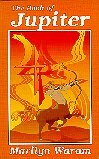
THE BOOK OF JUPITER - Marilyn Waram, $15.95

Contents:

Dedication
Acknowledgments

1. All the possibilities
2. From Zeus to Peter Pan
3. The power of paradigm shifts
4. Bigger, brighter, better
5. Common problems with Jupiter
6. Jupiter in the houses
7. Jupiter in the signs
8. Jupiter in aspect
9. All the possibilities
Appendices:
1. Herman Hesse
2. Examples of Jupiter in houses, signs, aspects & stella

Index

Comment:

First published in 1993, there are a few remaining copies from the ACS of long, long ago. Waram's fundamental approach to Jupiter is as Letter Nine of Zip Dobyns' famous letter system, wherein Jupiter represents Absolute Truth, ultimate values & beliefs, as well as the search for all of these. Dobyn's system conflated houses with signs with planets, which is fine for beginners. Waram, who now goes by her real name of Marelon Bjorkaes, was a student of Zip's. Zipporah Pottenger Dobyns passed away in 2003.

I confess I didn't relate that well to the first five chapters, I thought them dated. There is an amusing dialogue between Jupiter & the author in chapter 5, pgs. 75-79. Here's sample:

Astrologer: Why? Why are mistakes so intolerable?

Jupiter: (getting louder) Well, what is the search for Truth all about? Every mistake is a step away from Truth, not toward it! Think about it. There no mistakes in Truth.

Astrologer: Okay. But you treat it as a one-shot deal, as if you are supposed to get it all right on the very first try.

Jupiter: You are.

Astrologer: But you are a mutable planet. You are supposed to be flexible. [That dang 9th Letter strikes again. - Dave]

Jupiter: I'm also a fire planet & I'm going to get darned angry when I'm thwarted or proven wrong. I'm supposed to be right! I represent Truth.

Astrologer: Or maybe the search for Truth?

Jupiter: That doesn't feel... worthy enough. For me. I think I'm too big to be a mere "search".

And to think in the years since this was published, Google has done wonderfully as a mere "search".

Chapter 6, Jupiter in Houses, is meaty, as is chapter 7, Jupiter in signs. Waram continues to conflate houses with signs, but that is her system. When I read Jupiter in the first, and then, Jupiter in Aries, I am not reading the same text twice, but I do get a strong sense the author feels the two values (first house with the first sign of the zodiac) to be extensions of each other. Waram says that Jupiter, when he's crossed, can lash out rather nastily. Which I haven't seen myself, though if some other planet lashes out & Jupiter happens to be nearby, he is always happy to pour gasoline on the fire. Which is simply Jupiter being Jupiter. Jupiter is like a lens. It magnifies everything, good & bad. In 1994, a comet hit Jupiter. In the weeks leading up to the event, scientists wondered if it would even be visible. Jupiter is a very big planet after all, and the comet was very small by comparison. But as any astrologer could have predicted, Jupiter makes everything bigger, and it was a spectacular event.

Chapter 8, Jupiter in aspect, is not as good. Individual planetary pairs, Jupiter-Mars, Jupiter-Venus, Jupiter-Pluto, etc., are a ramble. We want clean delineations. Jupiter-Venus square is like this. Jupiter-Saturn opposition is like that. Which we do not get. Chapters like this are where editors need to hold the author's feet to the fire. Make them hammer out what they know. Make the author make the hard choices, not slide around them.

The concluding essays are nice, as well as the first appendix, a delineation of Herman Hesse's chart (author of Steppenwolf, which was once quite popular). Appendix 2 gives lists of people with Jupiter in each house, as well as in each sign (by degree). It concludes with lists of people with specific Jupiter aspects, and the precise orbs. This might be worth the price of the book. In it, we learn that Cheiro, the palmist, had Jupiter & Mars in exact opposition. Bobby Fisher, the famous chess player, had Jupiter & Venus in exact square, as did Alice Cooper, John Denver & Erwin Rommel. This section, as well as chapter 8, on aspects, include the four major asteroids.

ACS, 292 pages.


Read the book? Want to tell the world? How many stars (1-5) would you give this book? Tell us!


JUPITER MEETS URANUS: From erotic bathing to star gazing - Anne Whitaker, $23.95

Contents:

Foreword
Introduction

1. Presenting Jupiter & Uranus
2. An historical perspective
3. Exploration & innovation: 15th to 20th century
4. The Jupiter-Uranus conjunction in Aquarius
5. 1997-1998: Collective life
6. 1997-1998: Individual experiences
7. Postscript from Neptune

Appendices:
1. Charts: Their provenance
2. Mundane charts, 1609-1997
3. Seventeen lives 1997-1998
4. Additional research material
5. Mary, Dolly and Andi "O Brave New World?"
6. Participants' feedback

Biography
Index

Comment:

This book tells how Jupiter Uranus conjunctions, which occur every 14 years, and in particular, the Jupiter-Uranus conjunction in Aquarius of 1997-1998, lead to the recreation of the world as we know it today. That should be enough for anyone to judge the book, but here is an excerpt to further help you:

Objectives, Expectations & Problems:
There was a definite problem with researching the observational band in these individual cases. As has just been demonstrated, in the collective examples major developments of a "boldly going where humanity has not gone before" nature occurred as Neptune transited 4-7 Aquarius, with distinct peaks at the four Hot Spot crossings. This effect was not coloured by the presence of another planet or planets on those degrees, thereby adding further credence to the theory that powerful planetary meetings imbue the degree areas of their meeting with their quality. This theory, which has long intrigued me, was previously supported in the summer & autumn of 1997, with Uranus' return to 4-7 Aquarius reactivating the "Jupiter-Uranus effect" of the February 16 conjunction in both collective & individual life.

However, participants were initially chosen bcause they were born when a planet, angle, or the Moon's Node was located between 4 & 7 degrees of Aquarius. The problem with researching Neptune's transit was that Neptune in conjunction with any planet, angle or Node, at any degree of the zodiac, in anyone's horoscope, constituted a major symbolic event in their lives which might express itself on a number of different levels. This being the case, and the sign in question being Aquarius (which in any event is ruled by Uranus) would it be possible to fulfil my objective of detecting a specifically "Jupiter-Uranus effect" underlying the personal feedback for the Neptune transit? (pgs 94-5)

So the premise, if I understand it, is that Uranus fascinates us & we want to know more & keep track of it. Aquarius is the ideal sign of the zodiac. It never does anything wrong & we must give it everything it asks. Therefore, when Jupiter meets up with Uranus in Aquarius, it's obviously a big special event that merits a book, which first appeared in 2003.

There is some good stuff in here, but you have to wade through a lot that isn't.

Well, then! Lemme see.... We can do better still! Pluto, the Ultimate Planet, enters Aquarius, the Ultimate Sign, on March 24, 2023. Tbere's no need to wait. We can start cranking out Pluto-Aquarius books right now. Doesn't make any difference what the premise is. The more fanciful the better, espeically if there's heavy dose of mythology to it all. Lots of money to be made...

AFA, 166 pages.


Read the book? Want to tell the world? How many stars (1-5) would you give this book? Tell us!


SATURN

Weiss


Schostak

SURVIVING SATURN'S RETURN: Overcoming the most tumultuous time of your life - Sherene Schostak & Stefanie Iris Weiss, $14.95
Contents: Acknowledgments; Introduction

1. Persona (Aries); 2. Attachment (Taurus); 3. The Mind (Gemini); 4. Home (Cancer); 5. Creativity (Leo); 6. Purification (Virgo); 7. The Other (Libra); 8. Transformation (Scorpio); 9. Higher Mind (Sagittarius); 10. The World (Capricorn); 11. Community (Aquarius); 12. The Source (Pisces); Conclusion: Why we need a Saturn now; Additional reading; Index.

Comment: A book on Saturn return, intended quite clearly for 29-something females (sorry guys). From a marketing standpoint, this is quite hopeful. Most 20-somethings that I've met haven't settled down enough / haven't had enough hardship in their lives as yet, to make astrology interesting. An unpleasant Saturn return will do it well-enough, but by the time you stumble upon astrology (presuming it's astrology you stumble upon), the return itself is over & you're looking backwards. Such was my experience.

In a few places the authors confuse sun-sign and/or ascendant sign values with their proper subject, which is Saturn-sign values. There is Saturn-as-daddy which I find annoying. (Saturn-as-daddy happens when Saturn falls in certain houses in the natal chart. It is not a sign-based variable. This is a common mistake.) Aside from these two caveats, the writing is good, the help offered, it seems to me, is actually helpful. More help can be found by reading Saturn's house placement as if it were Saturn's sign. For Saturn in the 3rd house, read Saturn in Gemini, etc. Now if we can get this book into the hands of those who could profit by reading it.

The authors run Saturn return workshops in New York, a websearch will find them.

McGraw-Hill, 230 pages.


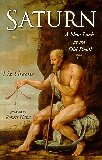
SATURN: A new look at an old devil - Liz Greene, $15.95
Contents: Introduction; In the water signs & houses; 2. In the earthy signs & houses; 3. In the airy signs & houses; 4. In the fiery signs & houses; 5. Aspects in the birth chart; 6. In synastry; 7. Conclusion.

Comment: This is the book that launched Liz Greene's literary career. Written shortly after she moved to London in the mid-1970's, first published in 1976. At which time the author's name, as originally shown on the front cover, was "Dr. Liz Greene" The "Dr." on the front got removed around 1990, but you can still find "Dr. Greene" on the back.

Overall, a rather good book on the subject.

Weiser, 196 pages.


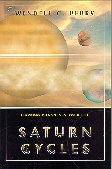
SATURN CYCLES: Mapping changes in your life - Wendell C. Perry, $27.95

Contents:

Introduction

Part 1: The Saints: People who made good use of their Saturn transits
1. The Dali Lama
2. Oprah Winfrey
3. Thomas Merton
4. Bruce Lee
5. Albert Einstein
6. Malcolm X
7. Bono (Paul Hewson)
8. Jimmy Carter
9. Michael J. Fox
10. Ralph Nader
11. Gloria Steinem
12. Carl Gustav Jung

Part 2: The Sinners: People who made poor use of their Saturn transits:
13. Britney Spears
14. O.J. Simpson
15. Mata Hari (Margaretha Zelle MacLeod)
16. Hermann Goring
17. Janis Joplin
18. Paul Gauguin
19. Lee Harvey Oswald
20. Bill Clinton
21. Andrew Cunanan
22. Jerry Siegel
23. Jim Bakker
24. Jayne Mansfield

Part 3: Saturn at work for you:
25. Saturn at work on the midheaven
26. Saturn at work on the ascendant
27. Saturn at work on the Imum Coeli
28. Saturn at work on the descendant
29. Saturn conjunct natal Saturn
30. Saturn opposed natal Saturn
31. Saturn square natal Saturn

Appendix: Abbreviated ephemeris for Saturn, 1990-2020

Bibliography

Comment: In this book, 24 biographies of notable people, as they experienced Saturn in their lives, in particular as it aspects itself & the angles of the chart. Amplifying this is Part 3, a guide to Saturn's effects in the natal chart generally. It describes the Saturn return in these words:

What these examples show is that during your first Saturn return you can expect the call to grow up, take on the work or the role that will occupy your adult life, and face the limitations and problems that will define you as a person. It is a transit that is generally characterized by hard work, hard choices & fateful decisions. Doors may be opened for you during this return, but these opportunities always come with heavy responsibilities and far-reaching implications. No Saturn transit should be taken lightly, but this one is particularly weighty. Missteps here almost always have major ramifications later on in life. Bad ideas take on an energy and momentum that is very hard to correct. At the same time, you have to be willing & ready to take advantage of opportunities that come to you during this transit, even the ones that at first glance don't seem at all that promising or attractive. Small starts and incremental changes made during this transit have a way of becoming extremely significant as your life moves forward. (pgs. 284-5)
This is sage advice, and based directly on the author's investigations of his 24 subjects. The problem with famous people is they have famous lives & these lives are in many ways not typical of those of average individuals. It would help, I think, to temper these conclusions with the experiences of average clients, with their average lives and average results. The Saturn return is never fun, but it does not always result in lasting fame or eventual self-destruction. Sometimes you just have to endure it. Ask your family & friends how they spent the year after their 29th birthday & you will get all kinds of stories.

Llewellyn, 308 pages.


Planets: The Moon Mercury-Saturn Uranus-Pluto Leftovers!


The Astrology Center of America

207 Victory Lane, Bel Air, MD 21014
Tel: 410-638-7761; Fax:410-638-5154; Toll-free (orders only): 800-475-2272

Home Author Index Title Index Subject Index Vedic Books Tarot E-Mail: Dave


Established 1993, The Astrology Center of America is owned & operated by David Roell.
This entire site (AstroAmerica.com) is copyright 1996, 1997, 1998, 1999, 2000 by William R. Roell.
All rights reserved.