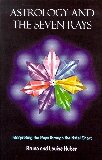
I had overlooked this book, a caller brought it to my attention. I open the book at random and found Bruno talking about the personality ray, and the mental, astral/emotional and physical bodies. Back in the 1990's I did rays better than I did astrology, I was impressed.
Then I had a quick scan of the table of contents (above) and I wasn't. So let's have a detailed look:
In the Preface we learn the book was given as a series of lectures in 1998, which makes it contemporary with my own studies. This is hopeful. This was Louise and Bruno's last joint lecture, due to Bruno's subsequent death a year later. Which is called "untimely," though I believe it was in keeping with Bruno's own time framework, see above. Unlike some transcriptions, these were edited into a readable book.
The first chapter, the introduction, by Bruno, is largely theoretical and need not concern us one way or the other.
The second chapter, on esoteric thinking, also by Bruno, is largely theoretical, like the first. So far as what rays are, what they do, what sort of person they make, there is nothing here, so this need not concern us.
The third chapter, The entity of the seven cosmic rays, is by Louise. The diagram on pg. 35 is the first concrete thing in the book. In it, the three primary rays (1, 2 and 3) relate to cardinal, fixed and mutable, while the four rays of attribute (4, 5, 6, and 7, all descending from the 3rd) are each qualified by one of the four elements: Air, Earth, Fire and Water. Which is still academic and theoretical, but nicely associates astrology with the rays. I have not seen this done before, but I confess this is the first promising book on rays and astrology that I have seen. Aside from this one table, chapter 3, like the two previous, is abstract. Many people like abstract metaphysics.
In the fourth chapter, Finding the rays in your chart, the table on pg. 50 is explicit. The personality ray is determined by the four angles in the chart. If all four angles in your chart are cardinal signs, you have a first ray personality (power). If all four are fixed, second ray (love-wisdom). If all are mutable, third ray (activity). If one axis is cardinal and the other fixed, that's 4th (harmony/conflict). If one is fixed and the other mutable, that's 5th (science). If one is mutable and the other cardinal, that's 6th (religion/devotion). And if all four angles are at the ends or beginnings of signs, that's 7th (magic-organization). Bruno gives himself the sexy, new age seventh ray personality, a term which is vaguely defined
Continuing with chapter 4, the mental ray is defined by the house placement of the Sun. If the Sun is in an angular house, your mental unit is ray 1, 2 or 3. If your Sun is in an angular house and a cardinal sign, your mental unit is first ray, if your Sun is in an angular house and a fixed sign, your mental unit is second ray, if your Sun is in an angular house and a mutable sign, your mental unit is third ray. The mental ray is "how you think," which is as far as Bruno defines it. This is a slippery term, as most people think with their gut. If your Sun is not angular, then you are to take its element, where water signs (Cancer, Scorpio, Pisces) are fourth ray, air signs (Gemini, Libra, Aquarius) are 5th ray, fire signs (Aries, Leo, Sagittarius) are sixth ray, and earth signs (Taurus, Virgo, Capricorn) are seventh ray. Do the same for the Moon, which gives the emotional body, and Saturn, which gives the physical.
Bruno's example is Albert Einstein. Huber gives him a 6th ray personality, 2nd ray mental, 6th ray emotional and 6th ray physical: 6-2-6-6. By way of contrast, Benjamin Creme, who has worked extensively with rays and has given the ray structure of around a thousand (Maitreya's Mission, in the Appendix), says Einstein had a 2nd ray soul, 2nd ray personality, 4th ray mental, 2nd ray emotional and 3rd ray physical. Which is (2) 2-4-2-3. As Huber and Creme were exact contemporaries, as Creme lectured and spoke widely about the rays (he's still alive), it is strange that Mr. Huber does not reference him. This book was initially given as a series of lectures in Exeter, which is in extreme south-west England. Travellers must go through London, which is Creme's home address.
The fifth chapter, by Louise, is about the effects of the rays. The title of the chapter says this is to be about the "personality" but the chapter in fact covers the various rays on all four of the bodies.
On the personality level, Creme and the Hubers are in basic agreement. The personality is your essential character. You can be forceful, eager to please, busy, crazy, scientific, devotional or organized (my wording, not theirs). Creme's definitions are sharper, but the Hubers will do in a pinch.
Regrettably, the Hubers are lost with the physical. They confuse it with the personaliy. A first-ray physical, according to the Hubers, is forceful. A first ray physical is in fact a body-builder, or a US Presidential candidate. First ray physicals have great stamina.
As this is an excuse for me to parade a bit of what I know about the rays, I will continue. To the Hubers, a second ray physical is timid and kind and caring. Regrettably, this has nothing whatever to do with the physical. Creme points out that as the physical is the seventh and last and most dense of all the bodies, it vibrates strongly to the three odd rays and does not do well as a second ray physical, which are often dead by the age of 30. Schubert, according to Creme, had a second ray body.
Third ray bodies, according to the Hubers, are smart, because they are intelligent. Which confuses mental-personality with physical. According to Creme - as well as me - 3rd ray physicals are compulsively active. They are no smarter - or dumber - than anyone else, as intelligence is found elsewhere. They, and seventh ray physicals, constitute the majority of physical bodies.
Fourth ray bodies, according to the Hubers, are constantly worried about things, about presenting the right appearance, etc. Which confuses the physical ray with the (very common) 4th ray astral/emotional. Fourth ray bodies, according to Creme, and from what I have personally observed, are gymnasts. They tend to be smallish and very, very supple. Charlie Chaplin was a 4th ray physical.
Fifth ray bodies - again, we are talking of bones and muscle and flesh, nothing else - are, according to the Hubers, equipped with great minds and a refined appearance. They are like Virgos. In contrast, what Creme gives - and what you can work out for yourself, if you learn the rules, fifth ray physicals tend to be physically clunky. They often have "beetle brows." They are often just a little bit spastic, as I once had one at close range. Thomas Edision was such.
Sixth ray bodies, according to the Hubers, are physically beautiful and want to be Temples of God. According to Creme - and, again, what you can confirm for yourself, 6th ray bodies are large and flabby and fleshy. They are reasonably stable and so live average length lives, but tend to appear and disappear in groups. Most of the bloated nudes painted by Titian were 6th ray. Since WWII, many 6th ray types have been born in America. If you have a sixth ray body, dieting will not help.
Seventh ray bodies, according to the Hubers, are willful and perverse. Tell them to do something and they will do something else, to spite you. This - again - confuses the physical with some other body, in this case, a 4th ray astral/emotional, which, according to Creme and me, is bi-polar. Seventh ray physicals are organized in some deep, fundamental level. Their desk may look like a mess, but they invariably know where every single thing is. (By contrast, I have known third ray physicals to keep detailed lists, as their busy lives are inherently scattered.) Creme notably says their skin is dry and mineral-like, as the 7th ray relates strongly to the mineral kingdom.
The Hubers' definitions of the emotional/astral bodies are purely imaginary. There is no point. Of the 700-odd individuals given in the back of Maitreya's Mission, only one or two had a 1st ray emotional body. There were no 3rd, 5th or 7th ray emotional bodies. These are extremely rare, presuming they have ever existed. And this because, as with the physical, the astral/emotional vibrates so intensely to the sixth level, where it is found, that it precludes odd rays altogether.
Because I am driven and because I am stupid, in the early 1990's I was inspired to enter 800 of Creme's individuals into a computer, so that I could sort the various rays, their points of evolution (i.e. standing among the four great initiations), their occupations, etc. (Creme used to give additional individuals in his monthly magazine.) And while some of my associates thought Creme's work was "fishy," (that they could not quite say why they thought it fishy I did not hold against them), when I sorted the results, I found they worked on nearly every level. And I can throw a lot of crap at things, as my readers know well. Thinking back on Creme's work today, I am still largely in agreement with it.
You should know that Blavatsky, Bailey, Creme - and myself, the least of them - are in agreement that rays cannot be determined astrologically, that they supercede astrology. On pg. 47 Bruno dismisses Alice Bailey (In fact Alice Bailey had no notion of astrology. . . She had the wrong definitions.). As Bailey was merely the secretary to the Tibetan, this is the same as saying the Tibetan was an idiot. Who in fact wrote an entire book on esoteric astrology, the one that is still held to be the standard. One ought to be more careful with one's opinions than that.
In my grade school classes there was once a dunce, an unlikeable, unloved kid who looked completely spastic. He had no friends. He was not smart in any way, he compensated by boasting to anyone who would listen long enough to hear. But I once saw him throw a football, with great skill and accuracy. He would have made a fabulous quarterback, if anyone had liked him. What happened to him I do not know.
I had that poor kid in mind as I looked through this book. That, somehow, the mentally addled Bruno Huber, if he found a subject he could call his own, might rise to the challenge and write an extraordinary book. Alas, the Hubers have written a book about the rays that is in keeping with their other books.
If you want a treatise on the rays, get Maitreya's Mission vol. 1 (I have the 2nd edition, from 1990, I do not know if there was a 3rd, etc.) and go to pgs. 219-249. The rest of the book, on the new age and the reappearance of the Christ, is a mixed bag. It appears to me the new age has failed. Which, if true, will have tragic consequences for all of us.

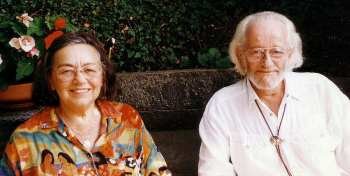 Bruno Huber, 1930-1999, was a Jesuit-trained simpleton who, presumably under the spell of C.G. Jung (both men lived in Zurich) wanted to be a psychiatrist and then wanted to use astrology with his work. Problem was, Huber wasn't that bright and by his own account, found the study of astrology beyond him.
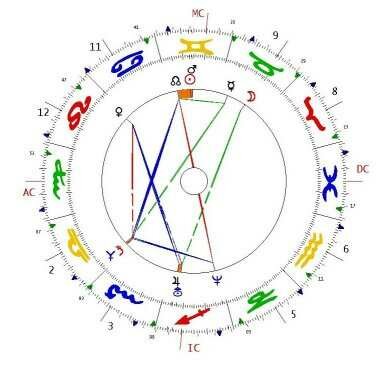 His system appeals to those who have no idea what astrology is, but feel that it's important and are satisfied with some sort of sketchy system. It is unfair to call them all simpletons, though not unfair to note that in years past a number of astrological heavyweights have endorsed the Huber method. I suspect there are many Huber students who would gladly take up a study of real astrology if they could only find it. Perhaps, in stumbling upon AstroAmerica, they will.