The Astrology Center of America, 207 Victory Lane, Bel Air, MD 21014
Tel: 410-638-7761; Fax:410-638-5154; Toll-free (orders only): 800-475-2272
Vedic TITLE Index Vedic AUTHOR Index Vedic PAGES Index Vedic SEARCH Engine Astrology Home E-Mail: Dave


Vedic Astrology:

Authors names beginning with A

Authors appearing on this page include Achyuta of Kerala; Shanker Adawal; G.S. Agarwal, S.K. Duggal, G.S. Aggarwal, C.M. Bhalla; and M.K. Agarwal
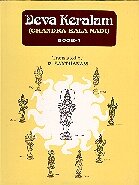

DEVA KERALAM (Chandra Kala Nadi), in 3 volumes - Achyuta of Kerala & Venkatesa, translated by R. Santhanam, $75.00/set

Contents of Book 1: Slokas 1 - 2718 of Achyuta. 267 pages.

Contents of Book 2: Slokas 2719 - 3407 of Achyuta, along with Slokas 1 - 1997 of Venkatesa. 294 pages.

Contents of Book 3: Slokas 1998 - 4775 of Venkatesa. 323 pages. Tables of contents in all three books give page headings (over 800 in all) which is too many to quote here.

Comment: From Santhanam's preface to Book 3: As the discerning reader understands, the work covers two areas of delineation. A particular space of rising degree called Nadiamsa is used to depict a series of events to occur in the native's life , one of the subtle techniques of handling a horoscope. On the other hand, countless general principles are enumerated on the lines done by popular series of text-books like Parasara Hora, Phala Deepika, Saravali, Jataka Parijata and Sarvatha Chintamani dealing with natal horoscopy including dasa effects, transits & the like. In some cases, general principles that do not consider Nadiamsa technique are incorporated in the Nadiamsa reading. To avoid confusion to the reader, these have been separated by me in the translation, as far as possible. Further, these have been more clearly sorted out in the index given at the end of [volume 3]. The index [in volume 3] now embraces all three parts.

As the reader knows, each sign has 150 Nadiamsas and the 12 signs have a total of 1800 Nadiamsas. It is not humanly possible to bring out a work dealing with all the 1800 Nadiamsas. To the extent possible, the authors Achyuta & Venkatesa gathered a large amount of information on this most subtle division. An intelligent reader can multiply the use of a Nadiamsa four-fold keeping in mind the three classifications of the 12 zodiacal signs into movable, fixed & common signs....

The text excels in merits in tactfully combining the usage of Vimsottari dasa & Kala Chakra dasa. So also in applying transits with reference to signs caused by certain Navamsa positions. Many such rare techniques are available in this wonderful work. One who uses such techniques frequently will be able to issue successful predictions. (from Book 3, page xv.)

With original Sanskrit slokas throughout.
Sagar Publications, hardcovers with dust jackets. Sold only as a set.


Dr. Shankar Adawal is a thief. He freely steals other people's work & publishes - and copyrights - them as his own. He even admits this. For evidence, see my notes here. Let's not go down the M.C. Jain path again. Let's strike a blow for honesty & integrity. Tell his publisher, Sagar, to drop him.

RELATIONSHIP: MARRIAGE, LOVE & SEX - Shankeer Adawal, $28.00
Contents:

Preface
1. Marriage
2. Astrology & marriage
3. Marriage - an astrological study
4. Mars & marriage - various combinations
5. Astrology & happy marriages
6. Predicting marriage
7. Ashtakavarga system of prediction
8. Love marriage, lovers & love marriage, fatal love marriage, heartless love
9. On love marriage & a second wife
10. Marriage & horoscope agreement
11. Selection of marriages - some suggestions; The wife: An investigation
12. Failure of marriage
13. Combination for delayed marriage
14. Timing the event of marriage, Determination of the time of marriage, Marriage-time & conditions
15. Mysterious death of a beloved partner
16. Female horoscopy
17. Marriage & career prosperity - an illustration
18. Significance of matching, Horoscopes for marriage
19. How is your sex life?
20. Some problems of matrimonial affairs
21. From marital discord to desertion & divorce
22. Chosing a life-mate
23. Governing factors of marital happiness, planets for marital happiness
24. Seventh house: A general assessment, On the seventh house
25. Marriage & the ninth house
26. Saturn & Jupiter: Harmony or discord?
27. All about Kuja (Mangal) dosha; Who is Manglik?; What is Mars dosha/Manglik Kundli?; Astrological remedial measures (Jyotish remedies); Problems due to Manglik dosha
28. Venus in marriage
29. Venus & Mars: How they shape you?
30. A few observations on the aspect of marriage
31. The use of gemstones in marriage
32. Remedies (Upaye) - Remedies through gemstones, remedies through mantras, various mantras of Mars, Mantras for all nine planets, remedies through Stortras, reemedies through Vrat
33. Tips related to marriage

Comment: Detailed & comprehensive, with an emphasis on the marriage partners (not their families) & love marriage, rather than arranged.

Sagar, 374 pages.


KNOW ABOUT LUMINARIES (The Sun & Moon) - Shanker Adawal, $32.00

Contents:

Preface
Understanding the Sun

1. Basics of astrology
2. The Sun
3. The appreciation of the 12 existences (houses) of the Sun
4. The Sun's astrological effects (aspects) (includes aspects to Uranus, Neptune, Pluto, the angles & node)
5. The Sun in the signs of the zodiac
6. Appreciation of high situations; Sun mahadasha; Antardasha; Remedies of malefic planets
7. The horoscope of the Sun; Results of planets in different constellations; Major period of Sun - 6 years
8. The Sun - Moon aspects in relation to relationships; Planets in the 10th
9. Yogas & astrology; Solar yogas - Vesi yoga; Vasi yoga, Ubhayachari yoga
10. Planets & profession; Ashtakavarga of the Sun
11. Combination of Sun with the planets, studied through Bhrigu Nadi
12. Gochara Phala or transit effects of the Sun & your character
13. Health problems signified by the Sun; Remedies in Vedic astrology
14. The Sun: Remedies according to the benefic & malefic effects of the planets; Remedies through the Sun mantra; The Sun namaskar; Remedy through yantra; Remedies through gem stones; Rationale for prescribing a gem

15. The Moon
16. Appreciation of the existences
17. The Moon's astrological aspects (includes aspects to Uranus, Neptune, Pluto, the angles & node)
18. Appreciation of high situations; The horoscope of the Moon
19. Result of planets in different consellations; Major period of the Moon: 10 years; Planets in the 10th house; Born with Moon in Scorpio
20. The lunar group; Descriptions of the first seven lunar constellations; Lunar yogas; Anapha yoga; Sunapha yoga; Durdhara yoga; Maha-bhagya yoga; Adhi yoga - Moondhi yoga; Kemadruma yoga
21. Planets & profession; The Moon; Lagna
22. The Moon's ashtakavarga
23. Combination of the Moon with other planets, studied through the Bhrigu Nadi
24. Gochara Phala or transit effects; Choosing an auspicious lunar nakshatra
25. The Moon mahadasha & antardashas & remedies of the malefic planets; Moon & mental maladies; Moon causes good & bad days; Moon & menstrual disorders
26. The Moon mahadasha: Effects of sub-periods; Health problems signified by the Moon; Astrology, emotions & the soul; The messages of the Moon
27. Remedies in Vedic astrology; The Moon: astrological effects & remedies; Remedies through the Moon mantra; Remedies through yantra; Remedial remedies to propitate at week Moon; Remedies through gemstones

Comment: A free-wheeling mix of western tropical & Vedic sidereal astrologies, resulting in a mongrel book. On the first page of Chapter 1 (pg. 2) the dates of the sun's annual transit through the various signs are given. These are dates for the tropical zodiac, not sidereal. On page 6 are instructions for calculating Tithis. We are to subtract the number of degrees of Sun from Moon, divide the result by 12 to find the Tithi. This gives different results according to the zodiac used, tropical or sidereal. Pages 8, 9 & 10 are Nakshatras & instructions for finding the Moon's nakshatra. This is to be done from a natal chart calculated according to the Indian / Vedic system (pg. 8), but, in sharp contrast to clearly defined tropical Sun signs, the definition of Indian / Vedic system is nowhere given.

Western-style psychological delineations are well-written - and glaringly not-Indian. On the back of the book we typically find a blurb about the author, which is usually written by the author himself. Here is the first paragraph:

The author, Dr. Shankar Adawal, is a professional in the field of telecommunications. He is presently working for one of the Fortune 500 Indian companies at a senior position. Did his MBA and PhD, and worked with Multinationals in India and abroad, before joining his present assignment. He has travelled extensively both in India and abroad. He also has keen interest in Human Rights.
For contrast, here is a passage chosen at random, from pg. 334:
The Moon-Venus contacts involve instinctive feeling reactions to social and intimate relationship; and these shape responses to the situations and experiences. The conjunction indicates that you have sociable and friendly relationships, Characterized by sensitive awareness and affection.
The first excerpt, as I well-know, is standard Indian English. The second is standard American (not UK) English, except for the word [the] and the capital [C], which I have boldfaced.

Elsewhere, delineations of the Moon in the Nakshatras ends mysteriously after the seventh, Punarvasu.

Overall, the book is wordy & repetitive in places. There is some fairly nice, strictly Vedic passages on yogas, dasas, ashtakavargas & such, including sutras extracted from Jatakaratna, Jageshvar, Hillajatak & others, which include the original Sanskrit.

Sagar, 544 pages.


KNOW ABOUT TRANSIT OF PLANETS - Shankar Adawal, $33.00

Contents:

i. Preface
ii. Introduction

1. What are transits?
2. Transiting configurations & their applications
3. Timing transits
4. Astrological transit
5. A psychological approach to transits & progressions
6. The astrological house, planets & aspect
7. Prediction based on transit (Gochar)
8. Ashtakavarga calculations
9. Planets in various houses & their rememdies 10. Understanding your transits & transiting planets
11. Planets transiting houses
12. Retrograde planets
13. Inner planet transits
14. Aspect details
15. Transits & the path of transformation
16. The astrology of transformation & an astrological perspective
17. Understanding & evaluating transits (Gochar)
18. A life pattern in the light of major planet transits
19. Research on transits
20. Role of planets & dashas in transit
21. Marriage & navamsa gochar (transit)
22. Timing of events through dasha & transit of planets
23. Must you be a victim of your stars?
24. Astrological remedies (upaye) for transiting planets

Comment: In the Preface we read the same caveat as to authorship as in Know About Astrology (discontinued), which in this book can be found on pg. ix.

I found it surprisingly easy to discover the true authors of this book. Take a chapter's opening sentence, type it, word for word, into Google (with quotes around it) and Google instantly reveals the unsuspecting source. Examples:

The Introduction is taken from Rob Hand's Planets in Transit, with minor editing.

The opening of Chapter 1, What Are Transits, is taken from Philip Graves's Introduction to Predictive Astrology - 1. It continues with IndAstro. It then continues with delineations taken from Where In City Astrology. Sandwiched among among that is a snippet taken from IndAstro. It concludes with an essay taken from Jeff Jawer.

Chapter 2, the rather brief Transiting Configurations & Their Application, is from Philip Graves.

Chapter 3, Timing Transits, starts with Chapter 2, Timing Transits, from Rob Hand's Planets In Transit. It then continues with Chapter 1 of Hand's book.

Chapter 4, Astrological Transit, is taken from the Wikipedia article on Astrological Transit. True to form, Adawal omits Wiki's 12 references.

Chapter 5, A Psychological Approach to Transits & Progressions, is taken from an article by Liz Greene at Astro.com. Which is plainly obvious, as in the second paragraph the "author" mentions "his" book, The Outer Planets & Their Cycles. Which is by Greene. This is followed by a very long section from Dane Rudhyar.

The start of chapter 6, The Astrological House, Planets & Aspect, was taken from Paul Wade. It continues with extracts from Ind Astro and an article by Mu'Min M. Bey at Astrology Weekly. The chapter concludes with an extract from the Srimadh Lalita Mahatripurasundari Trust.

Chapter 7, Prediction Based on Transit (Gochar) was taken from Astrocent. It continues with an article by Sarve Janaah Sukhino Bhavanthu. (This is Google's cache. The original site is here, if it's on-line.)

Chapter 8, Ashtakavarga Calculations, is original, or was taken from some printed source which is not on-line.

Chapter 9, Planets in Various Houses & Their Remedies - which appears, word for word, in Know About Astrology (above) was in fact taken from Sutradhari.com.

The opening of chapter 10, Understanding Your Transits & Transiting Planets, is taken from Art Charts, which is based in New York City. A little further on Adawal "borrows" from Paul Wade, and then from CafeAstrology.

Chapter 11, Planets Transiting Houses are taken from CafeAstrology.

Chapter 12, Retrograde Planets, is taken from CafeAstrology.

Chapter 13, Inner Planet Transits, is from CafeAstrology.

Chapter 14, Aspect Details, is again from CafeAstrology.

Chapter 15, Transits & the Path of Transformation, was stolen, title, subheads & all, from Shelley Jordan from the Curia.free.fr site.

The opening essay of chapter 16, The Astrology of Transformation and an Astrological Perspective was stolen, title, heads, subheads & all, from Dane Rudhyar. It then continues with work lifted from Lynn Hayes.

The opening of chapter 17, Understanding & Evaluating Transits (Gochar) was lifted from Vedic Astrology Consultancy & Research. The section on Saturn is from CafeAstrology. There follows a section from Indian Astrology Source. It continues with an essay by Mary McLean. This is a long chapter, composed of still more pieces. I will leave them for others to puzzle out, as it is easily done.

Chapter 18, A Life Pattern in the Light of Major Planet Transits, was taken, title, heads, charts & diagrams, from RayuduAstrology.

The first three pages of chapter 19, Research on Transits, MIGHT BE ORGINAL. I can't find an extract anywhere. Unfortunately, my copy is missing a signature (16 pages), it skips from page 578 to 595, which is already the next chapter. So you can Buy this book for the unique pages of Chapter 19! At least until someone lays claim to them.

The fragment of Chapter 20 that I have, Role of Planets & Dashas in Transit, was taken from Indian Astrology 2000.

Chapter 21, Marriage & Navamsa Gochar (transit) was taken, charts & all, from Jyotish News for November, 2000 (caution: pdf file.)

Chapter 22, Timing of Events Through Dasha & Transit of Planets, was taken from an article by S.K. Sawhney at FuturePointIndia.com. At that site the charts, as given in the book, are missing, but I suspect the page has changed since Mr. Adawal saw it.

Chapter 23, Must You Be the Victim of Your Stars was taken, head, bold-facing and all, from Dane Rudhyar.

Chapter 24, Astrological Remedies (Upaye) for Transiting Planets, is taken from an article by Krishna Wiuker at Jyotish, The Eye of the Vedas. In the middle Adawal interrupts for a few paragraphs that MAY BE ORIGINAL, and then inserts material from Indian Astrology Source (mantras actually chanted at that site), before concluding with Krishna Wiuker's article.

Dr. Shankar Adawal has EIGHT BOOKS IN PRINT. What do you want to bet that every one of them is like this?

You can reach Dr. Adawal here. You can reach his publisher, Sagar, here.

Sagar, 648 pages.


PRACTICAL VEDIC ASTROLOGY, 4th edition - G.S. Agarwal, $30.00
Contents:
Introduction; Casting the horoscope; Planets; Signs; Houses;

General: Predictive principles; Judging a horoscope; Yogas; Longevity: Marakas: Death; Marriage & married life; Children; Sex & astrology; Female horoscopes; Medical astrology & important combinations; Profession; Karakas; D-charts, Shodasvargas; Dasa judgment; Transits; Foreign travels; Matching of horoscopes: Manglik;

Miscellany: Retrogression, ruju, combustion, vargottama, critical degrees, indu lagna, rasmiballa, kulanasanamsa, planetary war, parallel, atmakaraka, avastha of planets;

Muhurta; Calendars; Horary astrology; Charts for easy reference; Index.

Comment: From the Preface: ....The credit of pushing this book through print goes to certain friends, who, immensely liked my diaries, in which I had preserved the hard earned fruits of my long, arduous, painful and very frustrating journey in the pursuit of astrology. Their incessant insistence to put these into print became such a pestering that I could not escape. I am not much of a fighter either, so I gave in.

The format of the book bears testimony to the fact that I have shirked writing & resorted to compiling instead. I have strived to offer the bare technical data, the tenets and the working rules - but devoid of any trimmings and frills of a writer. Earnestly, all that I can say is that the material provided between the covers of this book is time tested and should hold fast in over 70 percent of cases, a highly commendable success rate for any field of scientific discipline....

Books on astrology, in fact, cannot teach you how to make a prediction in as much as books on the art of playing cricket cannot teach you how to score. The secret, if it is one, lies in being out there. Be it an astrologer, a surgeon, a cook or a cricketer - never to let go of the proper technique, persevere, and, miraculously, that touch comes, a certain sense develops. (From page vii.)

Sagar, 399 pages, oversize paper.


ASTROLOGY CONCEPTS EXPLAINED (formerly Dictionary of Astrology) - S.K. Duggal, G.S. Aggarwal, C.M. Bhalla, $30.00
Contents:
A to Z entries for Vedic (and western) astrological terms.

Appendices: Many tables: Tables of Varga charts, Astrological charts for easy reference (keywords in chart form); Chart showing desi months (Vikram & Saka) as per position of Sun, also Lagna time in each sign for Chandigarh; Ayanamsha factor for any day in the year; Conversion of geographic to geocentric latitude; Horary astrology in Krishnamurti padhdhati; Table for correction in increase of the time interval while calculating sidereal time; Correction for different localities (for India, London, New York); Signs & nakshatras & their lords;

Degreewise aspects, their orbs & nature; Krishnamurti lords & sublords, 1-249; Hindu time measure; Strength of planets; Planetary revolutions; Angular distances; Compatibility of planets (Hindu & western); Friends & enemies in the signs; Nakshatras & their English equivalents; Conversion of clock time into Sidereal; Table of planetary hours (Hora periods); Fateful degrees of the moon; Mrityu Bhaga for planets & the lagna in different signs; Number of revolutions of planets in a Mahayuga compared; Mean time of one sidereal revolution of the planets; Speculum of aspects of planets (Indian system); Upagraha; Making Ashtakavarga charts - an easy way; Table of dignities & debilities of planets; Chandra-kriyas, Chandra-avasthas, Chandra-velas; Samvatsara.

Comment: The authors are the chair (Duggal) & vice chairs of the Indian Council of Astrological Sciences (Regd), Chandigarh chapter. This book replaces the earlier Dictionary of Astrology, by the same authors. The new book has 134 more pages than the old. An excellent, all-round reference book just got a lot better.

Sagar, 472 pages.


MYSTICS OF SARVATO BHADRA CHAKRA & ASTROLOGICAL PREDICTIONS, with norms for financial gains in share market - M.K. Agarwal, $16.00
Contents: Preface;

1. Importance of Sarvato Bhadra Chakra; 2. Important norms of astrology; 3. Sarvato Bhadra Chakra & its constituents; 4. All about stars; 5. All about planets; 6. All about signs; 7. Numerical strength of planets; 8. General strength of planets; 9. Vedha aspect of planets; 10. Forecasting methodology - future of individuals;

11. Forecasting methodology - how to determine benefic mahurata; Forecasting methodology - how to determine sickness & accidents; 13. Forecasting methodology - how to determine success in national politics and war; 14. Forecasting methodology - Horary; 15. Forecasting methodology - how to determine prices of commodities; 16. Forecasting methodology - impact of Vedha on Hindu castes; 17. Significators for countries, states, cities, commodities & other matters; 18. Sarvato Bhadra Chakra & other Chakras; 19. Case studies; 20. Astrological norms for financial gain in share market.

Comment: Sarvato Bhadra Chakra is a grid of 10 horizontal lines & 10 vertical lines, creating a total of 81 vargas, or squares. Into each goes the proper thing. Here is the start of it: Place the 28 Nakshatras (including Abhijit) in the top 28 vargas, excluding the four corners, which are reserved for the 4 vowels: A, AA, E, EE. In the east direction (with north at top?), goes Krittika through Aslesha (vargas 2-8). In the south goes Magha to Visaka (vargas 10-16). In the west, Anuradha to Sravana (vargas 18-24). In the north, Dhanistha to Bharani (vargas 26-32). Abhijit has special placement rules. The 12 signs of the zodiac, Taurus through Aries, are placed in vargas 58-72, omitting 61, 65, 69 & 57, reserved for consonants & vowels. After this, lunar tithies, weekdays, vowels, consonants and directions are all placed on the grid, as per directions. Reading this chart provides answers.

Sagar, 195 pages.


The Astrology Center of America

207 Victory Lane, Bel Air, MD 21014
Tel: 410-638-7761; Fax:410-638-5154; Toll-free (orders only): 800-475-2272

Vedic TITLE Index Vedic AUTHOR Index Vedic PAGES Index Vedic SEARCH Engine Astrology Home E-Mail: Dave

Established 1993, The Astrology Center of America is owned & operated by David Roell. Except where noted, this entire site (AstroAmerica.com) & its contents are Copyright © 1996, 1997, 1998, 1999, 2000 by William R. Roell. All rights reserved.