The Astrology Center of America, 207 Victory Lane, Bel Air, MD 21014
Tel: 410-638-7761; Toll-free (orders only): 800-475-2272
Home Author Index Title Index Subject Index Vedic Books Tarot E-Mail: Dave


Astrological Essays, page 3


Astrological Essays: Page 1 Page 2 Page 3

Here are more essays on astrological themes.

Indicates a book on our Top Ten list. If you would like to find more books like it, click on the star.
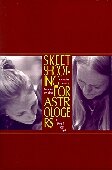
SKEET SHOOTING FOR ASTROLOGERS - David R. Roell, $24.95

Contents:

On Skeets
Preface

Houses, and what to do with them
Yogas of the East, Aphorisms of the West
Politicians and Astrology
Be a professional Astrologer and make lotsa money!
La Rentrée—How the French get back to business
How to read intercepted signs
Towards a new history of Astrology
Transmission, oral and written
The excitement of hope—The 2009 Inaugural chart
Rectification
Dear Dave
On Charles Carter’s The Principles of Astrology
Hot tips in real estate
Dancing Lessons: How the world sees you
Dancing Lessons: Where the money comes from
Astrology and number
State of play
Gardening
Fertility / On Zodiacs
Dancing Lessons: Techniques
Eclipse season
Eclipses: Mundane
Vive le Bastille
Tropical versus Sidereal
Astrology in the news
What is Pseudoscience? Doppler dogma
Astrology and weather
Cosmobiology
Science or Pseudoscience? Craters of the Moon
The best books on Progressions
AstroAmerica’s retrograde technology roundup
Pseudoscience proudly presents: The 5000 year old
theory of the Sun More on the Antikythera mechanism
Astro*Carto*Graphy at your fingertips
NASA lays an egg, and, Pain management
Rules for Operations, by H.L. Cornell
More on A pill in the hand

The Introductory from AstroAmerica’s Daily Ephemeris
Make money with astrology !
More on Make money
Friday the 13th of November is good for you !
Book of the week
Thee kinds of astrologers, by Sepharial
Retrogrades
Merry Christmas 2009
Reincarnation: Astrology and karma
Aphorisms
Reincarnation: Intercepted signs
Intercepted signs and reincarnation
More on houses
Initiation, and other new books
More Fun with houses
Neptune returns
Climes
Another birthtime for President Obama
George Washington’s Birthday
Sun versus Moon, which is stronger?
Help save astrology !
Mozart’s birthday
A Dream
Easter
How to set up a chart
How to calculate Tertiary Progressions
Spring planting
The new health care legislation Easy astrology
New books for spring
VOTE
Porphyry the Philosopher
Charles Carter versus Adolf Hitler
Odds and ends
A Charles Carter festival !
A new theory of astrology
The Pre-Copernican World

Epilogue: The Author’s Lament

Appendix: Natal charts mentioned in this book

Bibliography
Index

Comment:

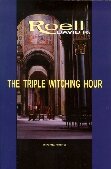
The first book of essays from AstroAmerica's ascerbic director. Not quite what you would expect. The title of the book seems to be a joke, as if telling us to not take anything we read too seriously. The essays, taken mostly from his monthly, and then, weekly, newsletter, cover a variety of topics, most of which are astrological. In addition to his own writing, the author has also included brief excerpts by H.L. Cornell, Sepharial, Ronald Davison, and others.

Most of the essays are short. They can be read in a matter of minutes. Some are less than a page. The author often launces into a subject, only to break off abruptly. I would like to see more of his house delineation system.

Roell says he reads charts largely from house rulers (which he terms "dispositors") alone. He gives a number of examples, including some cook-book delineations. He says his methods are superior to traditional aspects, in that dispositors, or rulers, give a wealth of detail, far beyond what aspects can do. As an example, he does Charles Carter one better and gives a short, frightening delineation of Adolf Hitler's chart. Which, according to Roell, Carter himself said he could not read. Here is part of it:

Now look at the chart with Scorpio rising. Mars rules from the 7th in Taurus. Debilitated, Mars wants to be in the first (all debilitated planets want to be in the house opposite, one of Dave’s Rules). Mars wanting to be in the first makes Hitler want to be the Man of Action! The Ruthless Hero.

Mars conjunct Venus made him sexually magnetic, but Venus, being retrograde, made Hitler The Man Your Mother Warned You About. In spades. He’s a no-good. He will seduce you, lead you up the garden path — and then murder you. Or, at the very least, be profoundly strange at your death (Maria Reiter, Geli Raubal, Ernst Roehm). Dysfunctional/debilitated chart ruler Mars killing the object of affection (Venus retrograde, ruler of the 7th) who just wasn’t good enough.

But, trine to the Moon, a long 16 degrees away from the Sun, and opposed to the ascendant, Hitler could keep his love-death nature away from the populace in general.

Mars/Venus conjunctions, in signs of Mars or Venus, especially when they rule the ascendant/descendant, always show people who are adored, loved, mobbed by thousands. Which Hitler was. (Not to mention Casanova.)

Elsewhere, you’ve heard that a 10th house Saturn means ultimate failure. Why? Because it takes on responsibilities until it is overwhelmed. That’s why. In Hitler’s case, Saturn was disposed by his Sun. When a 10th house Saturn disposes, or is disposed by, the Sun, it makes for a born leader. This isn’t a matter of aspect. It is inherent in the nature of the planets themselves. Not only is the Sun-Saturn person the man you will trust, it’s the person you instinctively look to for fathership itself. The qualities inherent in the very word, fiihrer. This is Hitler, the leader. (pgs. 174-5)

Many of Roell's ideas are innovative. For example, he believes astrology to be a product of number system and latitude north of the equator. Thus, he believes Hellenistic astrology to be an offshoot of Vedic astrology because, as he says, the Indians had a system appropriate to their tropical latitudes, whereas the Greek system, lacking an adequate number system, is in his opinion a make-do.

He is also convinced that in the days before the printing press, knowledge was transmitted orally, from generation to generation, by means of memorized poetry. He contrasts Poe's The Raven, with Lincoln's Gettysburg Address. He says knowledge of the earlier oral-based system had been long forgotten by the time of Guttenberg.

There is an extensive essay on initiation, which seems to be a private fantasy of the author. Perhaps he is one? But he does not say. Perhaps he does not know? Elsewhere Roell shows a hostility towards science, which he thinks is phony and much over-rated. He prefers engineering. He says engineering works, or they tinker with it until it does work. To everyone's surprise, he attacks astronomers, calling them "pseudo-scientists". Roell says the Doppler shift is not real, the sun is not a nuclear furnance, and that the craters of the moon were not made by meteors. He seems very sure of himself.

The book concludes with a new theory of astrology. Astrology, according to Roell, is a form of planet-to-planet resonance. The planets "vibrate" each other, and that collective vibration, as transmitted to us by the Earth itself, is our "astrology" of any given moment. Someone should look into that.

Overall, the book reminded me of the later books by Kurt Vonnegut. Late in life Vonnegut took to writing single paragraphs, which would be followd by more paragraphs. Piecemeal, but it seemed to advance his book in some mysterious way. Leaving aside the many distractions, Roell's book is one of the best collections of essays since Ivy Goldstein-Jacobson, and much more nicely printed.

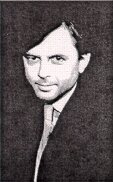
And if you're curious, the author of the book did indeed write these notes about himself.

Here are more excerpts.

Astrology Classics, 217 pages.


Read the book? Want to tell the world? How many stars (1-5) would you give this book? Tell us!


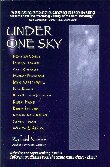
UNDER ONE SKY: Astrologers representing twelve different traditions read the same natal chart - blind! - Rafael Nasser, edited by Jodie Forrest, $24.95
Contents:
Editor's note; Preface; Prologue; Part 1: The astrologer's forum; Part 2: Joyce's story; Part 3: The interpretations:
  • Thumbnail sketches
  • Demetra George: Asteroid centered
  • Evelyn Roberts: Archetypal
  • Gary Christen: Uranian
  • Hadley Fitzgerald: Psychological
  • John Marchesella: Modern western
  • Ken Bowser: Western sidereal
  • Kim Roger-Gallagher: Light-hearted
  • Robert Hand: Medieval
  • Robert Schmidt: Hellenistic
  • Ronnie Gayle Dreyer: Vedic
  • Steven Forrest: Evolutionary
  • Wendy Z. Ashley: Mythological
Epilogue; Glossary

Comment: This was Nasser's idea, which makes him the producer of the book. He wondered how twelve different astrologers would "read", blind, the same chart. His method was to solicit twelve written interpretations of the same chart, that for "Joyce", born January 16, 1943, 4:18 pm CWT, Pryor, OK. The book suffers from two conceptual flaws: Astrologers were not chosen for their ability at blind readings, nor were they chosen for their ability at written interpretations. All have, or believe they have, strong writing skills. (At least eight have written books.) The result reads like twelve advertisments ("buy me!" "buy me!"), but, for the most part, cannot be indicative of actual reading styles, which are usually oral. For that matter, "Joyce" herself has strong writing skills: Her autobiography runs 41 pages & reads like a novel.

It is said that, based on "Joyce's" own story (which, of course, none of the astrologers read until after their interpretations were finalized), some astrologers got things more right than others. As "Joyce's" self-described history is subjective & as none of the astrologers provide their own birth-data, terms such as "right" or "wrong", "correct" or "incorrect", with regards to the readings, are meaningless. With these caveats, this is an interesting book.

Seven Paws Press, 489 pages.


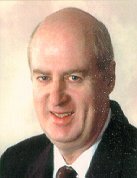
Nicholas Campion
SKY & PSYCHE: The relationship between cosmos & consciousness - edited by Nicholas Campion & Patrick Curry, $35.00

Contents:

Acknowledgments
Introduction: Sky & Psyche, heaven & soul, by Nicholas Campion

Part 1: The Alchemical Sky:
1. Love & the alchemical Saturn, by Liz Greene
2. The azure vault: The caelum as experience, by James Hillman

Part 2: Sky & Psyche:
3. Chartres Cathedral & the role of the Sun in the cathedral's Christian Platonist theology, by Bernadette Brady
4. Life across the cosmos, by Neville Brown
5. Imagining eternity: Weaving "The Heavens' embroidered cloth", by Jules Cashford
6. The soul of the sky, by Noel Cobb
7. The Russian spirit of place, by Cherry Gilchrist
8. A dimensional model for the relationship of consciousness & cosmos: Mathematical abstraction vs: conscious experience, by Robert Hand
9. Sun gods & moon deities in Africa, by Jarita C. Holbrook
10. Where the heavens meet the earth: Inspirations from the lives of Carl Jung, Jalal-u-din Rumi & Mahatma Gandhi, by Nicholas Pearson
11. Understanding the modern disenchantment of the cosmos, by Richard Tarnas
12. The secret life of statues, by Angela Voss

The Sophia Center
Contributors

Comment: Nicholas Campion's Introduction will set the stage. He is the director of the Sophia Centre at Bath Spa University.

The chapters in this book are based on lectures delivered at two conferences held in Bath on May 1 [Sunday] & July 1-2 [Friday-Saturday], 2005, respectively: "The Alchemical Sky" and "Sky & Psyche". Both events were initiated by Bath Spa University's Sophia Centre, and were designed, as the title of the second event suggests, to address the question of the relationship of between sky & psyche - in their broadest sense. Psyche, in particular, has a double meaning as soul and mind. Until the seventeenth century the two were indistinguishable; soul was that part of mind which could communicate with, travel to, and/or unite with, God. Alchemical sky, meanwhile, points to the possibility of transmutation - or tramsformation; that the psyche's ability to reflect on the heavens necessarily involves what we might nowadays call an evolutionary process.

The question of the relationship between the soul & the stars has been central to cosmology for thousands of years. The belief in the soul's journey to the stars permeated Egyptian thought. It appeared amongst the Greek Orphics, perhaps under Egyptian influence, from where it made its way into Plato's teachings in fourth century BCE Athens. Thanks to Plato's impact on the Church Fathers, his theories became a persistent, if controversial, part of Christian theology. In fact, one could argue that the entire Christian notion of soul is pagan. The belief that the soul could embark on a celestial journey draws attention to the cosmos as a real, physical space, one in which morality varies with the region within which one finds one's self. For medieval Christians, Heaven, the soul's natural home, was located above earth - beyond the stars.

To paraphrase Rob Hand, who spoke at the "Sky & Psyche" conference, the relationship of soul to stars was the central problem in cosmology during the centuries when Christian theology was being formulated and was fighting for supremacy over its pagan & heretical rivals. Did the soul come from the stars? If so, how did it return? Could it return? Did it even want to? These were the sort of questions that pervaded discussions of humanity's relationship with the divine.

While much modern psychology has become almost entirely dissociated from psyche in its original sense, the reaction to such ideas began with Jung in the 1910s and has found a home in the various schools of post-Jungian and transpersonal psychology. Plato's idea of the rational mind, that part of the psyche which was in contact with the divine, survives in various forms. His Idealism, which presented mind as independent of matter, flourishes, unrecognized, in a world in which most academic disciplines take materialism as their starting point. Plato's cosmic order though, survives in one other significant area apart from depth psychology, and that is pure mathematics. John Barrow, professor of mathematical sciences at Cambridge University and one of the orginators of of the anthropic principle, in which the universe & human life are to one degree or another mutually dependent, discussed "mathematical Platonism", which he considered "almost religious in the sense that it provides an underpinning necessary to give meaning to life & human activity." Roger Penrose is another mathematical Platonist. Professor of Mathematics at Oxford University, he shared the 1988 Wolf Prize for physics with Stephen Hawking. Penrose's explanation for the manner in which mathematics allows for intellectual inquiry is instructive.... (pg. 9-10)

This should be enough to give an idea of the book. It would seem the seminar topic became an excuse for papers on the contributors' pet projects, provided they could work "Platonism" into it. For example, Bernadette Brady's article, on Chartres Cathedral, relates her discovery that at sunrise on Christmas Day, the sun shines directly into the south transept, while, only a few hours later, the Xmas setting sun shines directly through the great western portal, straight up the nave itself. A fabulous feat of architecture, but nothing whatever to do with where your soul goes after you're dead.

Dear Sophia People: Compilations that are on topic will get a better reception than grab-bags. Topics that are relevant, which can be expressed in common terms, will beat out abstractions. Finally, Carl Jung is not God. He's not the Word of God, he's not even a good God substitute. Metaphysically, his ideas are crude. Endless, mindless repetition has not improved them. Given the harm his many crusaders are causing, a moratorium is overdue.

Floris Books, 234 pages.


ASTROLOGY FOR TODAY - Joanna Watters, $22.00
Contents: Introduction
1. Sun signs
2. The planets
3. The horoscope
4. Significance & symbolism
5. Transits & prediction
6. Locating progressions
7. Relationships
8. Astrology in action

Ephemerides; Glossary; Index; Acknowledgments

Comment: This is a very nice book about what astrology is & what it's like to be an astrologer, in practical terms. But on the way to getting itself printed, the text ran into a fancy high street publisher who smothered it with pictures & fancy layouts & turned it into a coffee table book.

Which made it hard to find the author's original text underneath it all. But look hard. It's there. And it's worth a read.

For example, the chapter on Relationships, which form the bulk of Watters' astrological business. First, she offers guidelines: Look at the 7th house, 1st house, planets in the 7th, Venus, Mars, the lights. Then follows brief pointers on synastry, with Catherine Zeta-Jones & Michael Douglas as a romantic couple, a brief comparison of a Cancer/Aries sun sign couple, the "cosmic marriage", which Watters defines as one Sun conjunct the other's Moon, other powerful forms of synastry, a note on Saturn, Saturn & serious love, Saturn in synastry. Then Uranus & John & Yoko, romantic or redeeming love, Neptune in synastry, Pluto & obsessive or healing love. The chapter ends with case studies, which are perhaps the best thing in the book. The author writes directly about her own experiences as a counselor, about the stuff she got right, about the many other times she didn't figure it out until it was all over. There's nothing here that's comprehensive, there's nothing in real depth, but the writing has immediacy.

Carroll & Brown, 160 pages.


ASTROLOGY FOR THE 21ST CENTURY - David Cochrane, $17.95
Contents: 1. Historical Perspective: Valid disciplines surpass our expectations; 2. The search for a starting point in astrology; 3. Theories on how & why astrology works; 4. Short digression: How I became interested in astrology; 5. Energy process interpretation of the planets; 6. Energy process interpretation of the Zodiac signs; 7. Energy process interpretation of the houses; 8. Harmonics!; 9. Degree meanings; 10. Compatibility analysis; 11. Treasure maps; 12. September 11, 2001; 13. A research study; 14. A second research study; Bibliography.

Comment: David Cochrane is the guy behind Cosmic Patterns astrology software (the famous Kepler program, among others).

This book is the culmination of 30 years of wrestling the beast of astrology. By beast I mean that astrology is so vast & immense that every astrologer carves out only a few inroads into this daunting field. (pg 23)

Surveying the book, Cochrane has read a variety of authors (only some of which are listed in the bibliography). His view of planets is influenced by Bailey's Esoteric Astrology (though he doesn't do much with it), he's also been influenced by Charles Jayne & Reinhold Ebertin & a number of others. It is impressive to read Cochrane's book if only for the sheer depth of his studies. He has a good deal of practical experience with harmonics. He combines harmonics with Vedic divisional charts (Vargas) to take another look at degree symbols, such as those by Jones & Charubel - both of which he mentions. The result is his own set of degree symbols, based, as he says, on a combination of harmonics & Vargas. In this, he reminded me of Mohan Koparkar's Degrees of the Zodiac Magnified, which, if I am not mistaken, was also based on the Vargas. So far as I am aware, Cochrane & Koparkar are unaware of each other's work, which, superficially at least, appear unrelated. This is a book that will repay close study.

Cosmic Press, 232 pages.


SEX & THE OUTER PLANETS - Barbara Watters, $19.95
Contents: List of illustrations; 1. The inner planets; 2. The middle planets; 3. The expanding universe;

4. Sexual distortion in the Saturn dominated chart: i. Adolf Hitler, ii. The Marquis de Sade;

5. Sexual distortion in the Jupiter dominated chart;

6. The outer planets: i. Uranus, ii. Neptune, iii. Pluto

7. Uranus as a sex significator: i. Homosexuality - rebellion, ii. Somerset Maugham & Gertrude Stein;

8. Neptune as a sex significator: i. Masochism, ii. Impotence;

9. Pluto as a sex signficator: i. Violence & delinquency, ii. Rape;

10. Pluto & genius: i. Sublimation of sex & violence, ii. Pasteur, iii. Van Gogh, iv. Eugene O'Neill

Appendices: A. Formula for casting Johndro charts; B. Source data for the horoscopes used in this book; C. Karl Marx - horoscope data.

Comment: Contrasts American & European sexuality & how Charlemagne's coronation turns up in Hitler's chart. Among other highlights: Sexual attitudes of European civilization: the predatory male, sex as sin, the female principle as evil. Sexual attitudes in the US: emerging matriarchy, guns & money as substitutes for sex. Sexual distortions of Saturn: sadism, guilt, anal eroticism. Sexual distortions of Jupiter: voyeurism, exhibitionism, promiscuity. Uranus as sexual significator: homosexuality, rebellion, fanaticism, the castration complex. Neptune as sex significator: masochism, impotence, narcissism, drugs. Pluto as sex significator: violence, rape, the criminal gang, group sex.

August 2010: This is now in the AFA's new squarish format (7.5 x 9.25 inch), which I think is dreadful & unattractive. It always pains me to see books rendered in this format. Llewellyn's guilty of the same thing, but they do better page formatting.

AFA, 122 pages.


SELF EVIDENT ASTROLOGY (TM!) BOOK 1: DECODING THE SOLAR SYSTEM - Jeffrey Sayer Close, $13.95

Contents:

Introduction

The Sun, Moon & eight planets
Symbols of the planets decoded
The eight planetary companions
Further evidence & comments on use in interpretation
Mathematics, the solar system, and rulerships

Appendices:
1. Planet data
2. Planetary moon data

Illustrations

Comment:

The best way to understand this book is to let it speak for itself. Here is the Self Evident (TM) pairing of the planets:
Mercury & Pluto (Humanity)
Here is a list of reasons why these two planets should be paired together:
  • They are both difficult to see
  • They have the most eccentric orbits
  • They have the greatest two orbital inclines from the plane of the solar system
  • They are each at the end positions in the solar system
  • They are the two smallest planets

Venus & Mars (Individual)
In the case of these two planets, I have suggested that it is their relationship to Earth that makes them a pair & that the Earth is the reference. So here is a look at how each of these planets compares with the Earth.

First Venus:

  • Venus is very similar in size to Earth
  • Both have atmospheres held to a hard surfaced planet
  • The are sequential in orbit
  • They have similar compositions
  • The orbit of Venus is synchronized so when Venus makes its closest approach to Earth, the same side of Venus is always facing the Earth. (The opposite is not true.)

Now Mars:

  • Earth & Mars are sequential in orbit
  • They have similar compositions
  • They both have atmospheres
  • They both have four seasons (similar axial tilt).
  • They both have polar ice caps
  • They both have at least one moon. (all from page 55)
Here is how the author describes individual planets:
Venus as integrational:
  • Venus has the next orbit inside of, or integrated with, Earth's orbit
  • As mentioned, Venus has an orbit that is synchronized (integrated with) Earth's
  • Venus is the only planet which has its day equal to its year. It could be said that they day & year on Venus are integrated into each other.
  • The atmosphere on Venus is tightly held in, almost integrated into the surface of the planet.

Jupiter, the king of separational:

  • Ajacent to the Mars-Jupiter asteroid belt
  • The first of the gas giant planets
  • Not counting Saturn's rings, Jupiter is the largest planet
  • Jupiter & its moons are almost like their own solar system trying to separate from our solar system.
  • The four small inner moons of Jupiter, like Phobos of Mars, are slowly falling into Jupiter & will either eventually smash into Jupiter or be thrown out of Jupiter's orbit - both results being separational in nature.
  • Jupiter is the only planet with more than one giant moon (Jupiter has four)
  • These four large moons of Jupiter strongly suggest the concept of separation. The three inner moons, Io, Europa & Ganymede are in synchronous orbits. The outermost moon, Callisto is just barely out of synchronization. Callisto emphasizes its separation from the orbital timings of the other three giant moons. (pgs. 57-8)
Okay, it's strange. So what do we do with it? Here's part of his analysis of George W. Bush, the recent US president:
The Sun & Moon in Astrological Charts . . .

The Sun is at 13 degrees Cancer 47 minutes in the twelfth house in George W. Bush's chart.
Sun: Source, point of radiation, outflow
Cancer: Starting family
Twelfth house: Self-separated from commmunity - Endings

Put together, these considerations suggest that George W. Bush instigates actions (Sun) that, taken together (Cancer), form a new family of endings (twelfth house). (page 3)

Elsewhere, Sayer is the very first astrological author to attempt to assign independent values to the moons of other planets:
As can be seen in Figure 25, there are a great number of large moons in the solar system. Several are larger than the Earth's Moon. Hence it is logical to ask if Earth's Moon has so much meaning, why don't astrologers have meanings for these large planetary moons?

SELF EVIDENT ASTROLOGY (TM) suggests a logical answer to this question. If we look at a planet with any rings & moons that it may have & treat this grouping as a planetary system, the meanings become more evident. Perhaps one can derive the meanings of the moons, in particular, by their characteristics. Since the vast majority of the planetary moons rotate around one of the four gas giants, there is an evident parent/child relationship between these planets & their moons. Hence it would be natural to assume a degree of inheritance of meaning from a planet to each of its moons. (pgs. 35-6)

Two people at the AFA published this book. They're friends of mine, or so I would hope. One of them edited the text. The other designed the cover (one of Jack's best covers, by the way). Should I tell you this is an okay - sorta - kinda - book & encourage you to buy it & not upset my friends, or should I simply say that despite the best efforts of people I respect, this is one of the most stupid books I have ever read? Why are the moons of Jupiter not a factor in astrology? Because if you plot the position of Jupiter to the nearest sixtieth of a second of a minute of a degree (which is impossible) you will still not be able to distinguish the planet from any of its moons. Ascribing value to planetary moons, such as make any difference to humans on Earth, failing to realize the importance of the Earth's Moon is because it's the Earth's Moon, is mindless stupidity. It's as if I said, well, I have a wife, and you have a wife and since my wife is important to me, your wife is important to me, too. It takes my breath away. And we are promised more books like this !!!

AFA, 94 pages.


Read the book? Want to tell the world? How many stars (1-5) would you give this book? Tell us!


ASTROLOGY FOR SELF-EMPOWERMENT: Techniques for reclaiming your sacred power - Dovid Strusiner, $12.95
Contents: List of illustrations; Tables; Acknowledgments; Introduction; Prologue

1. The magic of astrology; 2. Celestial self-discovery; 3. Astrology for self-empowerment; 4. The signs of the zodiac; 5. The planets; 6. The ascendant & the houses; 7. Aspects of sacred change; 8. Astrological affirmations & invocations; 9. Zodiacal & planetary visualizations; 10. Aspects & crystal energy transformation; 11. Finding the major themes in your birth chart; 12. Creating your program for self-change; Epilogue; Glossary; Index.

Comment: Here's the essence of this book, a five step process:

  • Step one involves learning about the signs, planets, houses & aspects & their part in the practice of Sacred Astrology.
  • In step two you will be introduced to the specific techniques of the astrology of self-empowerment, including affirmation, visualization, and crystal energy transformation. As you study these techniques you will learn how to affect fundamental changes in your psycho-spiritual nature.
  • Step three teaches you how to find the major themes & potential in your birth chart. This knowledge not only allows you to determine which planetary & zodiacal symbols to work with to affect sacred soul alchemy, but significantly, it also facilitates learning to unleash your creative force & invoke the healing energy within.
  • Step four is the design of your personalized astrological program of self-change - a program centered upon your major themes, patterns, & inner potentiality. At this point in the process you decide which areas of your life you wish to work on. You also choose specific exercises & therapies from those provided (affirmations, invocations, visualizations, and crystal energy therapies) or you create your own personalized exercises & therapies.
  • Step five is the ongoing practice of the techniques of Sacred Astrology. (from pgs 20-21)
Some quotes:

Alchemy is nothing but the art which makes the impure into the pure through fire - Paracelsus (pg. xi).

Astrology awaits its renaissance in the hearts of each of us. (pg. xiv).

We are, potentially, both the controlling center & the dynamic point of self-awareness that determines how a crisis or an event is integrated into our consciousness. (pg. 18).

An invocation of Mars: Come to me mighty warrior. I invoke the daring courage & power of Mars to enter my life. I feel your passion & strength. I call forth the spirit hero within myself to resonate with your energy. I am now vitalized with initiative, drive & masculine force (pg. 121). (Am glad he hasn't a clue what he just tried to do.)

Whole of Zodiac Breathing Exercise (pg. 127).

Planetary Rainbow Dance Exercise (pg. 129).

Solar Uranian Visualization Exercise (pg. 132).

If this speaks to you, get this book.

Llewellyn, 168 pages.


Astrological Essays: Page 1 Page 2 Page 3


The Astrology Center of America

207 Victory Lane, Bel Air, MD 21014
Tel: 410-638-7761; Toll-free (orders only): 800-475-2272

Home Author Index Title Index Subject Index Vedic Books Tarot E-Mail: Dave


Established 1993, The Astrology Center of America is owned & operated by David Roell.
This entire site (AstroAmerica.com) is copyright 1996, 1997, 1998, 1999, 2000 by William R. Roell.
All rights reserved.